Address
304 North Cardinal
St. Dorchester Center, MA 02124
Work Hours
Monday to Friday: 7AM - 7PM
Weekend: 10AM - 5PM
Address
304 North Cardinal
St. Dorchester Center, MA 02124
Work Hours
Monday to Friday: 7AM - 7PM
Weekend: 10AM - 5PM
Practical tips, beginner guides, and simple advice for growing herbs, greens, and more indoors with confidence.
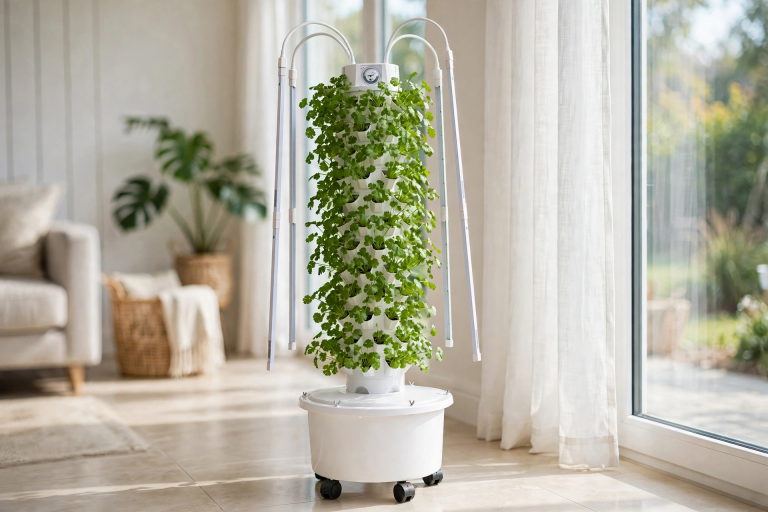
Cilantro bolts when heat and long days convince it summer is ending. Here's how to keep a hydroponic tower harvest leafy for weeks — with EC, pH, light, and harvest targets that actually delay flowering.
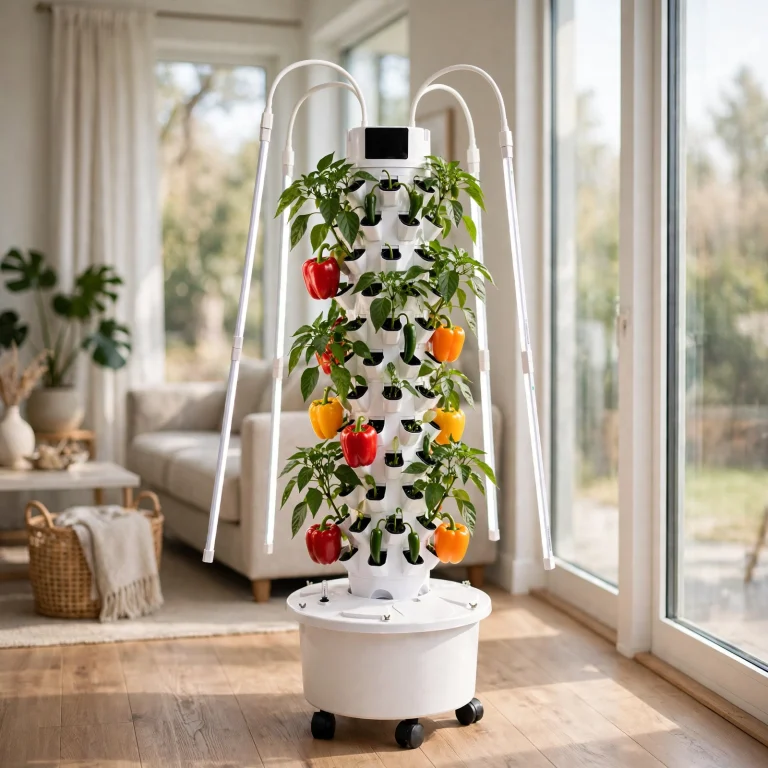
Peppers are heavier feeders than lettuce: run EC 2.0–2.5 for bells (up to 3.0 for hot types) at pH 5.8–6.2, give each plant 2–3 pods, and keep calcium steady to dodge blossom-end rot.
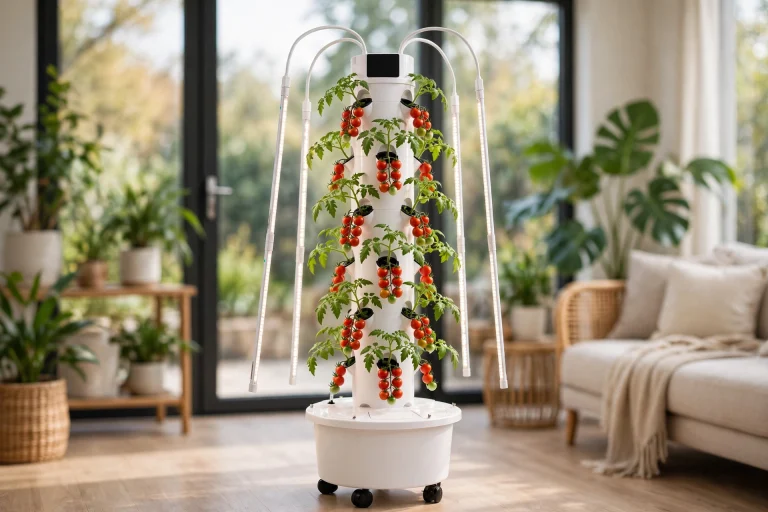
Cherry tomatoes are among the most rewarding tower crops, but variety choice makes or breaks it. Pick a dwarf or compact type, train it early, keep EC near 2.0–3.0 mS/cm, and hand-pollinate indoors.
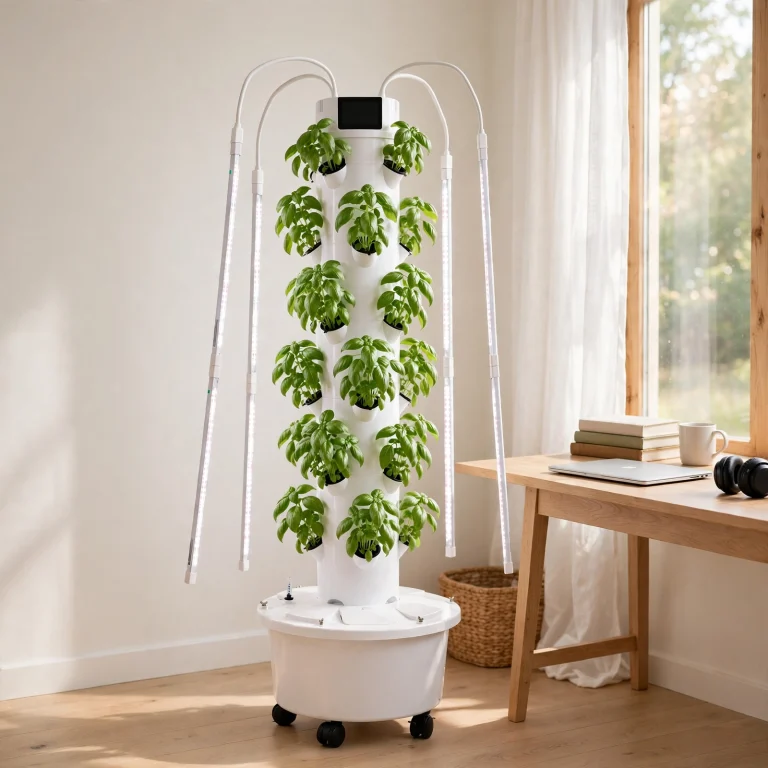
Basil is one of the easiest crops for a hydroponic tower. This guide covers EC and pH targets, light schedules, a week-by-week harvest timeline, and the pinch-above-a-node technique for months of cut-and-come-again harvests.
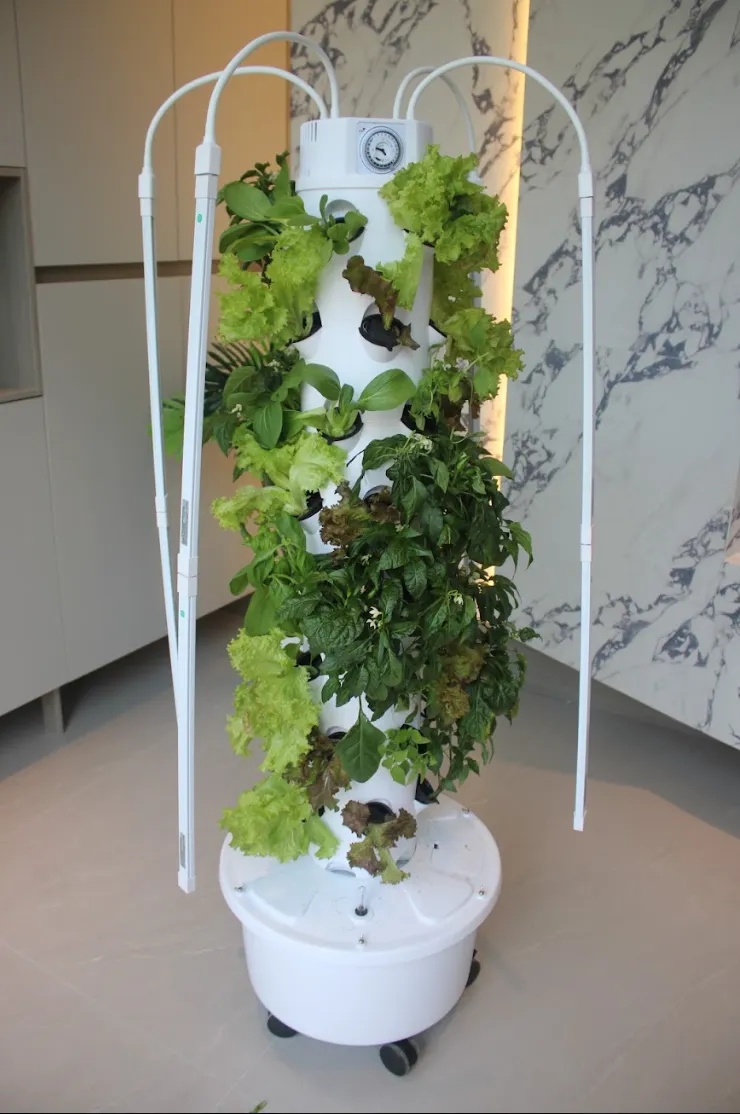
Crisp, sweet lettuce from a hydroponic tower comes down to cool temperatures and gentle nutrition — not luck. Here's the EC, pH, light, and harvest routine that keeps heads tender and bitterness away.
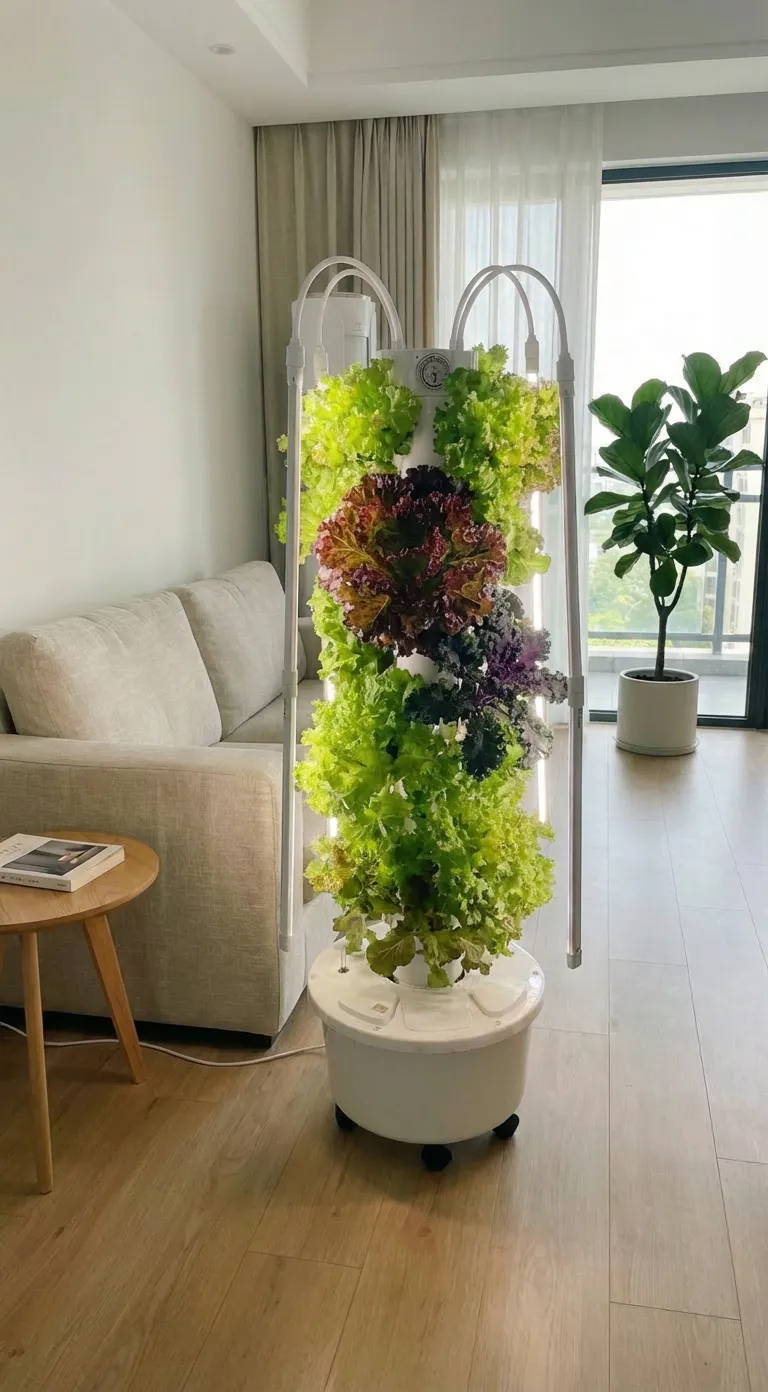
Change your hydroponic tower's reservoir water every 7–14 days — closer to 7 for fruiting crops and warm rooms, up to 14 for leafy greens. This guide gives you a schedule table, the five signs your water needs changing now, and the 15-minute swap routine.
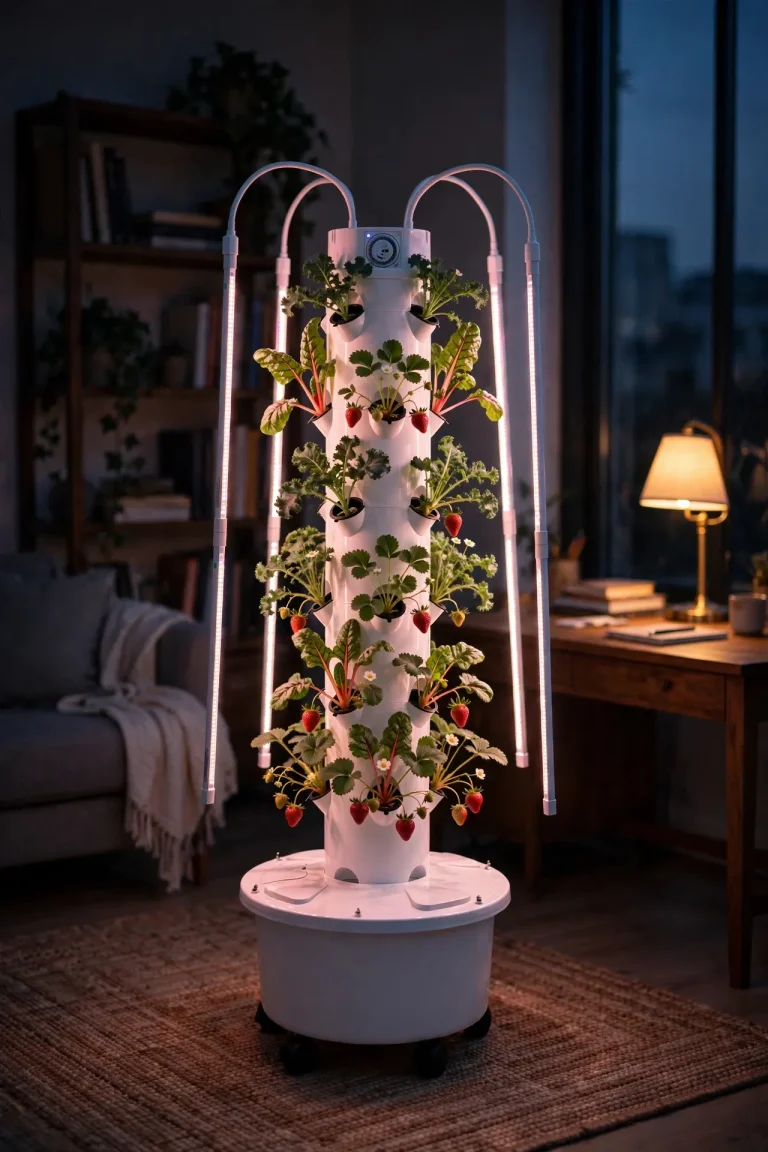
How much light does a hydroponic tower really need? Plain-English PPFD and DLI targets for leafy greens and fruiting crops, light schedules by growth stage, and how to tell when your plants want more — or less — light.
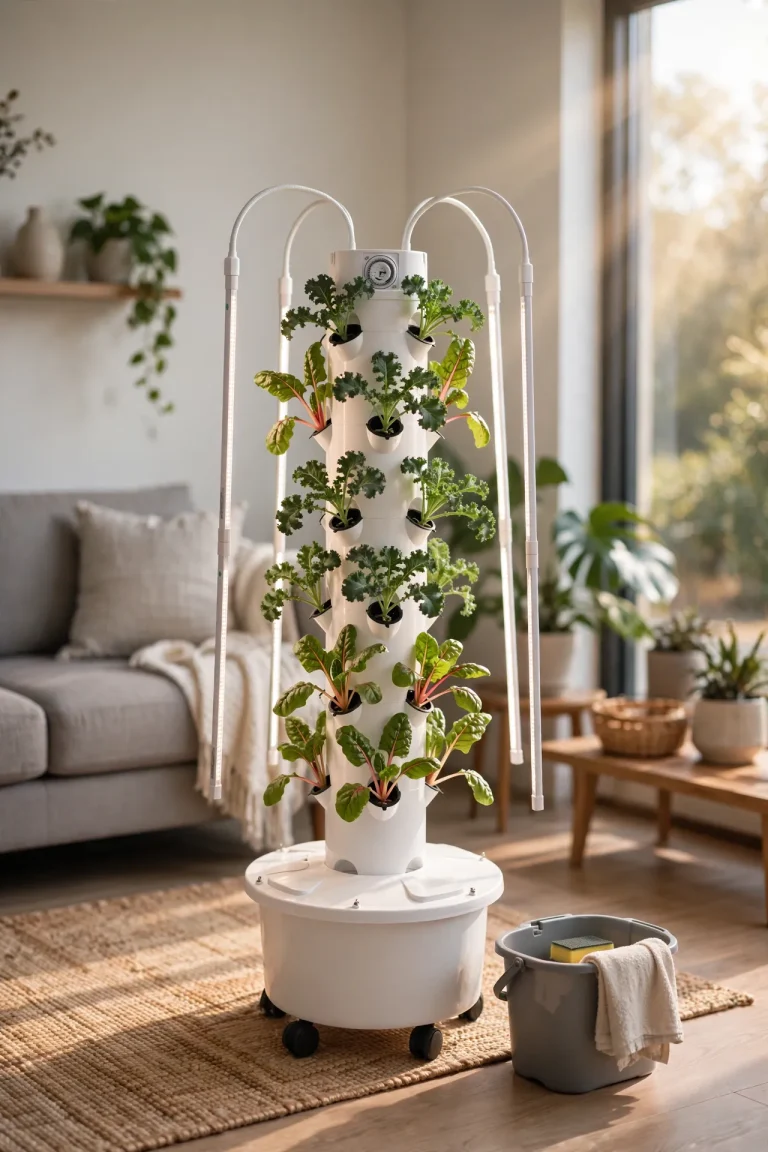
Algae loves light, water, and nutrients — exactly what a hydroponic tower provides. This guide gives you a realistic cleaning schedule, a safe step-by-step deep clean, and honest notes on vinegar, hydrogen peroxide, and bleach.
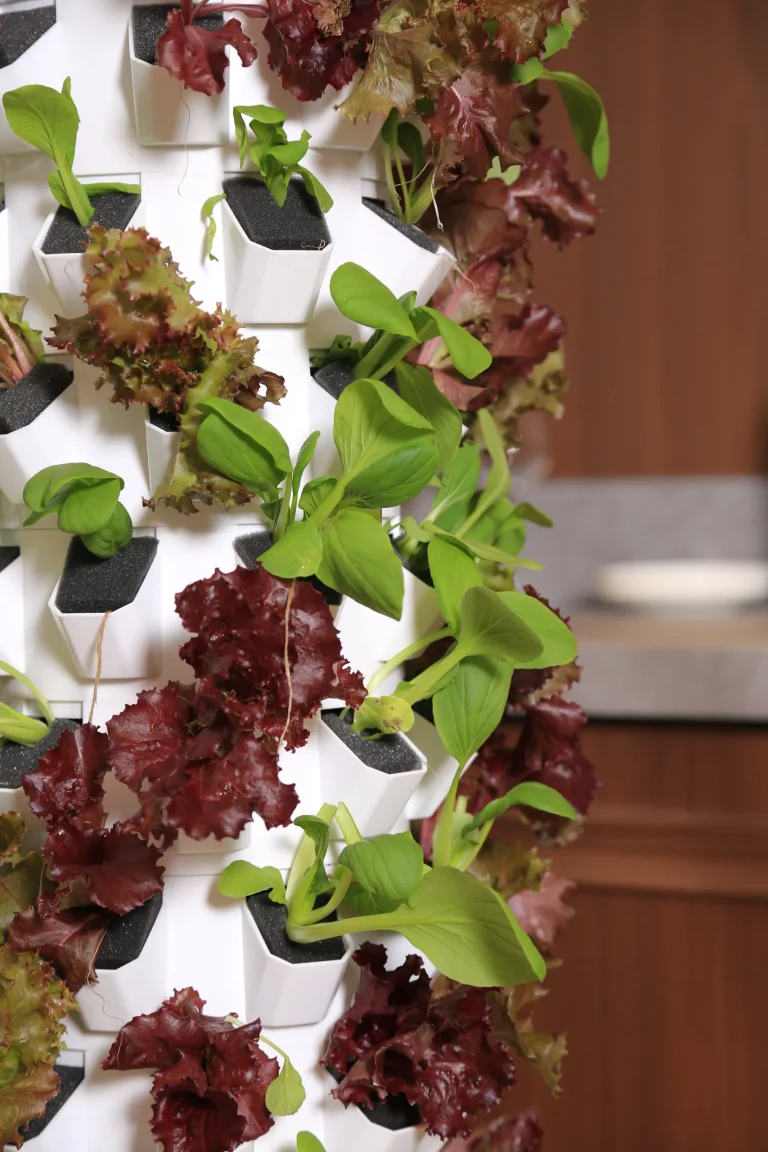
An aeroponic tower mists roots suspended in air; a hydroponic tower trickles nutrient water down past them — and most home "aeroponic towers" are actually the trickle kind. True aeroponics grows fastest but needs high-pressure pumps and clog-free nozzles; trickle towers are cheaper, simpler, and more forgiving. Shop the watering mechanism, not the label.
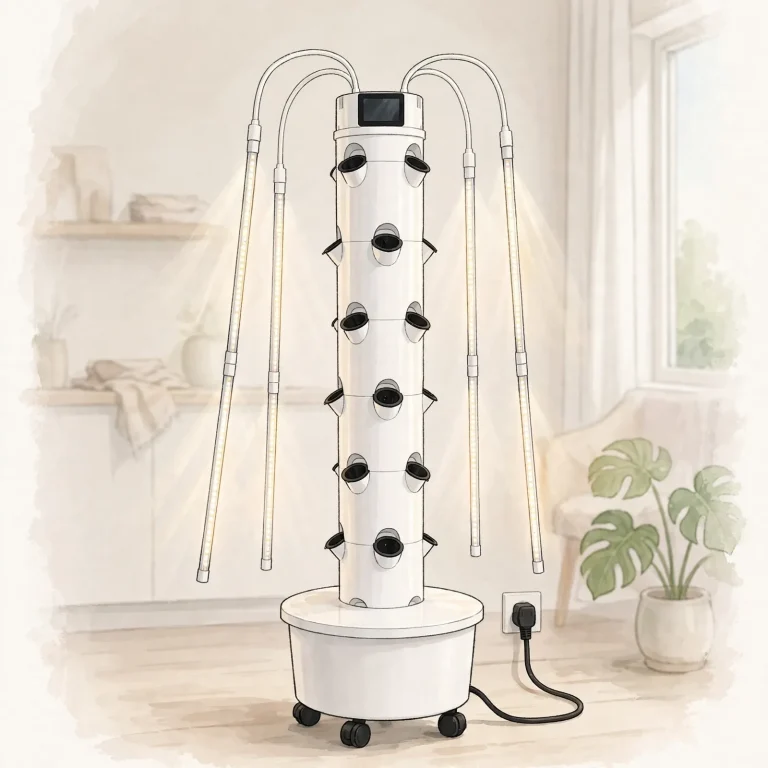
A home hydroponic tower uses 0.05–2.5 kWh per day depending on pump and lights: under $1 a month outdoors without grow lights, roughly $8–$13 a month indoors with LED bars running 14 hours daily at US average rates. The pump is the small part — typically 10W on a 15-minutes-on/45-minutes-off timer. Lighting dominates the bill.
