Address
304 North Cardinal
St. Dorchester Center, MA 02124
Work Hours
Monday to Friday: 7AM - 7PM
Weekend: 10AM - 5PM
Address
304 North Cardinal
St. Dorchester Center, MA 02124
Work Hours
Monday to Friday: 7AM - 7PM
Weekend: 10AM - 5PM
Indoor hydroponics beats traditional gardening on space, water use, and year-round growing — a tower fits under 3 square feet and recirculates up to 95% of its water — while soil gardening wins on simplicity, upfront cost, and crop range like root vegetables. For beginners in small homes who want fresh herbs and greens, hydroponics is the more practical pick.
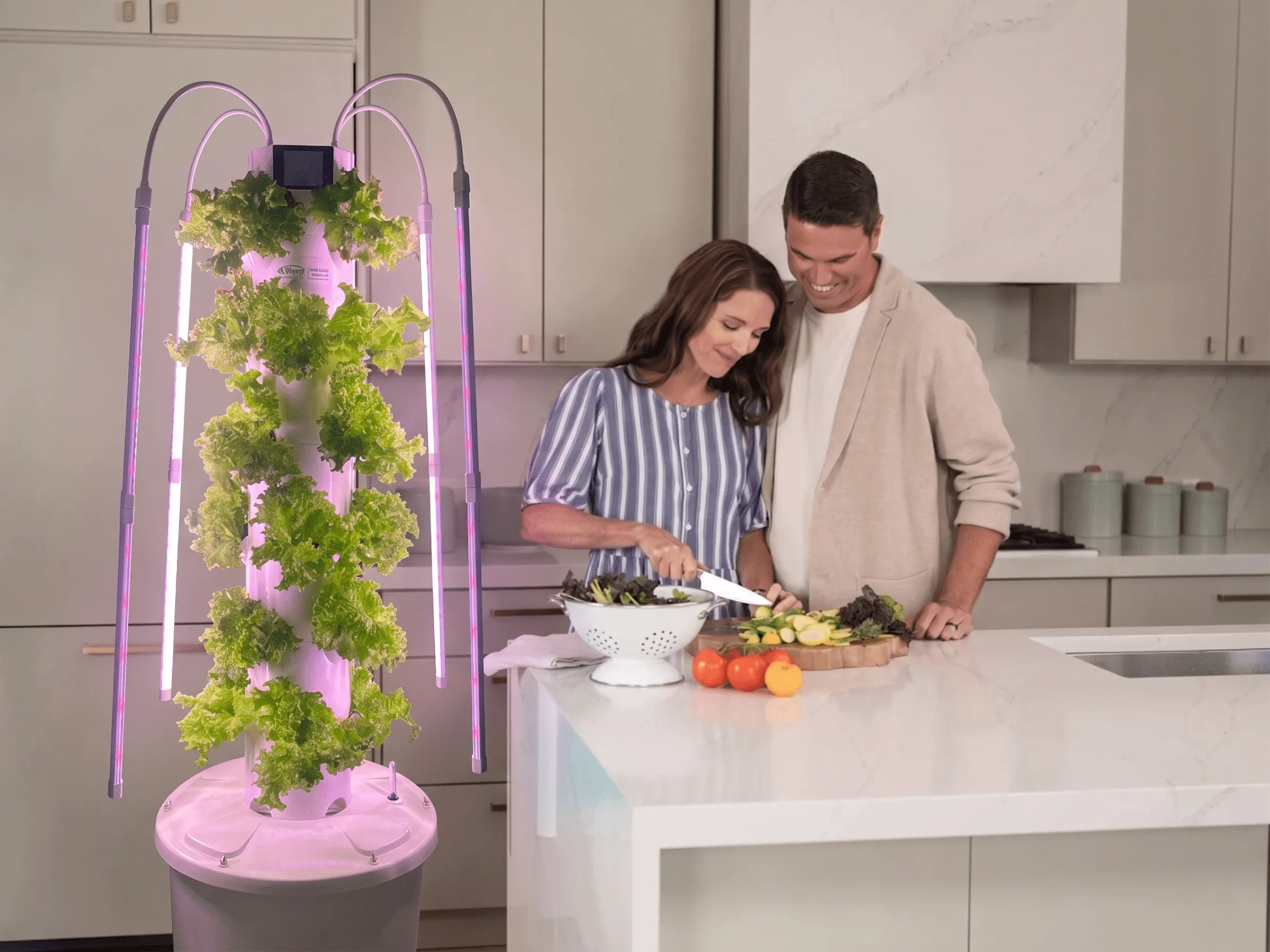
Short answer: Apartment with no yard? Indoor hydroponics wins — up to 90% less water, under 3 square feet of space, year-round harvests on a timer. Got a yard and love the soil ritual? Traditional gardening is cheaper to start and deeply satisfying. Pick the method that fits your space and routine — that is the one you will actually keep up.
Traditional gardening means growing plants in soil — in the ground, in raised beds, or in pots on a patio. You plant seeds or seedlings, water them, and let sun and weather do most of the work. It is the method most of us picture when someone says “garden.”
The appeal is real. There is something grounding about soil, and a tomato picked off a vine you tended all summer tastes like a small victory. But traditional gardening also hands you a stack of variables: weather swings, pests, drainage problems, a short growing season, and mud. Lots of mud.
Indoor hydroponics grows plants without soil. Instead, roots sit in water (or a soilless medium like clay pebbles) that carries dissolved nutrients directly to them. In a hydroponic tower, a pump circulates that nutrient solution up through stacked planting sites, and LED grow lights stand in for the sun. If you want the full mechanics, read how hydroponic towers work.
The result is a contained system: no digging, no weeds, no muddy footprints. You set watering and lighting on a timer, check the reservoir weekly, and harvest greens steps from your kitchen.
Here is the honest comparison, the way I would lay it out for a friend asking which to buy into:
| Indoor hydroponics (tower) | Traditional gardening (soil) | |
|---|---|---|
| Space needed | Under 3 sq ft of floor space; grows vertically | A 4×4 ft raised bed minimum outdoors; pots eat up sills and counters |
| Water use | Closed-loop system recirculates water — widely reported at up to 90% less than field growing | Open watering; much is lost to evaporation and runoff |
| Startup cost | Higher: a tower system runs several hundred dollars | Lower: soil, pots, and seeds can start under $100 |
| Running cost | A few dollars a month in electricity for pump + LEDs | Mostly water and occasional fertilizer |
| Growing season | Year-round, indoors, regardless of weather | Limited by your climate and frost dates |
| Mess | Minimal — no loose soil | Soil, drainage trays, and mud are part of the deal |
| Learning curve | Learn pH and EC once; the timer handles the routine | Intuitive at first, but soil, pests, and weather keep surprising you |
| Best for | Apartments, kitchens, anyone short on space or time | Yards, patios, and people who love the hands-in-dirt process |
Traditional gardening feels easier because it is familiar. But familiarity is not simplicity. A first-timer with pots has to guess at soil quality, watering frequency, drainage, fertilizer, pests, and — if outdoors — weather. That is six variables before breakfast.
Hydroponics asks you to learn two new numbers: pH (keep it between 5.5 and 6.5 for most crops, the standard window cited by Missouri Extension’s hydroponic nutrient guide) and EC, the measure of nutrient strength. Our EC, pH, and PPM cheat sheet walks through both in plain language. Once those are set and the timers are programmed, the daily routine is mostly “glance at the water level and walk away.”
So: soil is easier to begin, hydroponics is easier to keep going. And the method you keep going with is the one that actually feeds you.
This is where the tower format pulls ahead hard. A vertical tower grows up to 96 plants in a footprint smaller than a bar stool — under 3 square feet. Try fitting 96 pots on your kitchen floor and see how that goes.
A single 4×4-foot raised bed — the classic beginner recommendation — needs 16 square feet of yard plus walk-around room. Indoors, even a modest herb setup in pots tends to colonize every windowsill in the house. If your home does not have a yard, this question basically answers itself.
Traditional gardening, by a wide margin. Open soil loses water to evaporation and runoff every time you water. A hydroponic tower recirculates the same water through the root zone over and over; you mostly top up what the plants drink and what evaporates from the reservoir surface. Controlled-environment agriculture research routinely reports water savings of up to 90% compared with field-grown crops.
That matters beyond the water bill. It is also why hydroponics works in drought-prone regions and why you can run a tower for a week on one reservoir fill.
Startup: soil wins. A few bags of potting mix, some containers, and seeds can get you growing for well under $100. A quality hydroponic tower is a real purchase — several hundred dollars for the system plus nutrients and a pH meter.
Ongoing: hydroponics costs a little electricity. A tower’s pump sips power, and the LED lights are the main draw — but LEDs are efficient. At the U.S. Energy Information Administration’s national average of roughly 17 cents per kWh (your state’s rate will differ), running the lights 12 hours a day typically lands in the single digits per month. We did the full math in how much electricity a hydroponic tower uses.
Soil gardening’s ongoing costs are water, fertilizer, and replacing plants the slugs got to. Over a year or two of steady growing, the gap narrows more than most people expect — especially if you value the harvest you actually eat.
Mostly, yes — with one big exception. Leafy greens and herbs (lettuce, spinach, kale, basil, mint, parsley, cilantro) thrive in both, and fruiting crops like cherry tomatoes, peppers, and strawberries do well in towers too. See what you can grow in a hydroponic tower and the best herbs for beginners for the full lists.
What hydroponics cannot do well: root vegetables. Carrots, potatoes, and onions need deep soil to swell, and a tower’s net pots are not the place. If growing your own potatoes is the dream, get a raised bed.
Forget “which is better” in the abstract. Ask these instead:
For a deeper walkthrough of the indoor route, our complete hydroponic tower gardening guide covers setup through harvest, and hydroponic towers for beginners is the gentlest starting point if you are still on the fence.
No. If anything, beginners do better with hydroponics because the system removes the variables that trip up first-time soil gardeners — bad soil, overwatering, and pests. Learn pH and EC once and the timer does the rest.
Less than a typical kitchen appliance. The pump uses very little; the LED grow lights are the main draw, and a tower running lights 12 hours a day usually costs a few dollars a month at average U.S. rates. Full breakdown: how much electricity a hydroponic tower uses.
Yes. The nutrients are mineral salts — the same elements plants pull from soil, in purified form. Use fertilizers labeled for hydroponic or food-crop use, mix at label rates, and you are eating clean produce harvested minutes before your meal.
That is exactly what towers are designed for. Under 3 square feet of floor space, no soil, quiet pump, and LED lights on a timer. Just check that your lease is fine with a small indoor garden and keep the reservoir off hardwood without a tray.
Soil: under $100 to start, plus water and fertilizer through the season. Hydroponics: several hundred dollars for the tower, nutrients, and meters, plus a few dollars a month in electricity. The tower costs more up front but grows year-round, which changes the value math.
Hydroponics, once it is set up — the system buffers small errors and the routine is simple. Soil is forgiving of neglect in a different way (rain waters your plants for free), but pests, disease, and weather are outside your control. Pick your preferred kind of forgiveness.
Plenty of people do: a tower in the kitchen for daily herbs and salad greens, plus containers or a bed outside for tomatoes, potatoes, and whatever else wants real soil. They are complements, not rivals.
Research describes general methods; it does not verify any specific model, product claim or customer outcome.
Related reading: how hydroponic towers work, hydroponic towers for beginners, why indoor growing belongs in the modern home
We reviewed source material on 2026-10-04.

