Address
304 North Cardinal
St. Dorchester Center, MA 02124
Work Hours
Monday to Friday: 7AM - 7PM
Weekend: 10AM - 5PM
Address
304 North Cardinal
St. Dorchester Center, MA 02124
Work Hours
Monday to Friday: 7AM - 7PM
Weekend: 10AM - 5PM
A hydroponic tower is a vertical garden that grows plants without soil: a pump in the base reservoir lifts nutrient-enriched water to the top, and it trickles down past the roots before recycling back. Stacking 24 to 96 planting sites into under 3 square feet of floor space, towers suit apartments and small homes where a garden bed won't fit.
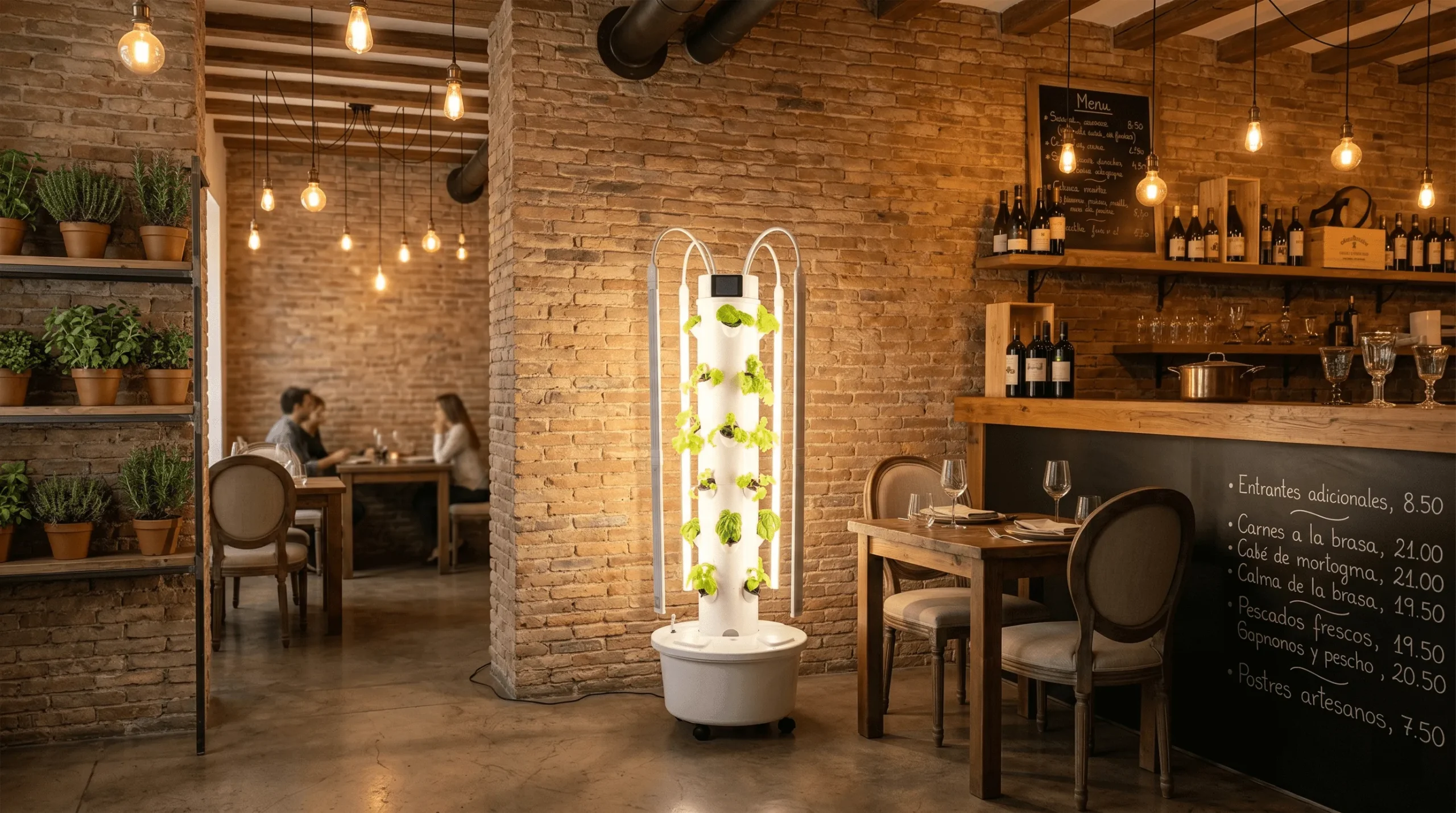
A hydroponic tower grows plants vertically without soil. A pump in the base reservoir pushes nutrient-rich water up through the tower, gravity carries it back down past the roots, and the cycle repeats on a timer. Plants get water, minerals, and oxygen in one closed loop — no digging, no weeds, almost no mess.
If that sounds technical, it really isn’t. Once you see the loop — reservoir, pump, tower, gravity, repeat — the whole thing clicks. This guide walks through exactly how it works, what it costs to run, and what your week actually looks like as a tower owner.
A hydroponic tower is a vertical column with planting sites stacked along its height. Each plant sits in a small net pot with its roots hanging into the tower’s interior, where they get misted or bathed by circulating water instead of sitting in soil.
The key idea: soil does two jobs in nature — it holds the plant up, and it holds water and nutrients near the roots. A tower splits those jobs. The structure holds the plant; the recirculating water delivers everything else, directly and on schedule. Roots never have to “search” for food the way they do in dirt, which is one reason tower-grown greens tend to grow fast.
Almost every home tower uses the same recirculating loop. Here’s the cycle, step by step:
Between waterings, roots hang in humid air inside the tower, which gives them the oxygen they need. That wet-dry rhythm is the whole trick: constant moisture without drowning the roots. If you want the full chemistry behind the reservoir, our nutrients guide (EC, pH & PPM) covers it in detail.
Less than you’d think. A typical home tower holds 24 to 96 planting sites in roughly 2–3 square feet of floor space — about the footprint of a bar stool. Compare that to the same number of plants in individual pots spread across a windowsill, countertop, and balcony, and the difference is obvious.
That density is the tower’s whole argument. You’re trading horizontal sprawl for vertical stacking, which is exactly what small kitchens and apartments need.
| Hydroponic tower | Traditional pots / soil beds | |
|---|---|---|
| Floor space for ~24 plants | 2–3 sq ft | 12–20 sq ft spread across surfaces |
| Water use | Recirculated; up to 90% less than field growing (Univ. of Arizona CEAC) | Mostly lost to drainage and evaporation |
| Watering | Automated on a timer | Manual, daily in summer |
| Mess | Contained in one reservoir | Soil spills, drainage trays, saucers |
| Weeds / soil pests | Essentially none | Ongoing battle |
Far less. Because the system recirculates, the same water passes the roots again and again instead of draining away. Research from the University of Arizona’s Controlled Environment Agriculture Center has found that recirculating hydroponic systems can use up to 90% less water than conventional field growing.
In practice, a home tower’s reservoir (often 5–10 gallons) might need topping up once a week or so, depending on plant size and indoor temperature. You’ll do a full reservoir change every 1–2 weeks to keep nutrients balanced — that’s the main recurring chore, and it takes about 15 minutes.
Plants still need light — the tower handles water and nutrients, not photosynthesis. You have two options:
My take: if you’re growing through winter or your kitchen doesn’t get strong sun, get the lights. They’re the difference between a tower that’s productive and one that’s decorative.
Less than most people expect. A small water pump plus LED grow lights typically adds only a few dollars a month to your electric bill. At the U.S. Energy Information Administration’s national average residential rate (roughly 18¢/kWh in 2025, though it varies a lot by state), a tower running lights 14–16 hours a day usually lands in the $3–$8/month range.
We did the full math — pump wattage, light schedules, real monthly costs — in how much electricity a hydroponic tower uses.
Honest answer: not much. A realistic weekly routine:
That’s it. No weeding, no hauling soil, no daily watering can. The timer does the daily work; you do the weekly check-in.
Leafy greens and herbs are the sweet spot: lettuce, spinach, kale, arugula, basil, mint, parsley, cilantro. They’re fast (harvest in 3–6 weeks from seedlings), forgiving, and they’re the ingredients you actually reach for while cooking.
Fruiting crops like cherry tomatoes, peppers, and strawberries work too, but they want more light and more nutrients — better as a second project once you’ve got a harvest or two under your belt. Root vegetables (carrots, potatoes) don’t suit towers at all; the roots need somewhere to swell.
See what you can grow in a hydroponic tower for the full crop list with timing.
If you want fresh herbs and greens at home but you’re short on space, hate the mess of soil, or just don’t want another high-maintenance hobby — yes, probably. Towers are at their best for beginners who want the system to handle the routine while they handle the harvesting.
They’re less ideal if you want to grow root vegetables, or if you genuinely enjoy traditional gardening as a hands-on pastime. Nothing wrong with dirt. But if your goal is fresh ingredients steps from your kitchen with minimal fuss, the tower is hard to beat.
New to all of this? Start with our hydroponic towers for beginners guide, or go deep with the complete hydroponic tower gardening guide.
No. Plants grow in net pots with an inert medium like clay pebbles or just bare roots. All nutrients come dissolved in the recirculating water.
Top up the reservoir about once a week, and do a full water-and-nutrient change every 1–2 weeks. Mature, thirsty plants in warm rooms drink faster.
Yes, if you have a genuinely sunny spot — a south-facing window or patio. But for year-round growing or dimmer homes, LED grow lights make results far more consistent.
Most home tower pumps are about as loud as a small aquarium filter — a low hum you’ll stop noticing. If it’s in a bedroom, check the model’s decibel rating before buying.
You can, and many people do in warm months. Just know that sun, rain, and temperature swings make the reservoir chemistry harder to manage than a stable indoor spot.
Leafy greens and herbs typically go from seedling to first harvest in 3–6 weeks. Cut-and-come-again harvesting (taking outer leaves, letting the center regrow) keeps them producing for months.
Yes — hydroponic nutrients are mineral salts, the same elements plants pull from soil, in purified form. Use fertilizers labeled for hydroponic or food-crop use and mix at label rates.
Research describes general methods; it does not verify any specific model, product claim or customer outcome.
Related reading: hydroponic towers for beginners, what you can grow in a hydroponic tower, hydroponic tower gardening guide
We reviewed source material on 2026-10-04.

