Address
304 North Cardinal
St. Dorchester Center, MA 02124
Work Hours
Monday to Friday: 7AM - 7PM
Weekend: 10AM - 5PM
Address
304 North Cardinal
St. Dorchester Center, MA 02124
Work Hours
Monday to Friday: 7AM - 7PM
Weekend: 10AM - 5PM
Hydroponic tower gardening grows plants vertically without soil: a pump circulates nutrient water from a base reservoir to the top, trickling down past the roots on a timer. This guide covers how towers work, which crops thrive — leafy greens, herbs, strawberries — how to mix nutrients and manage pH, lighting schedules, cleaning, and fixing common beginner problems.
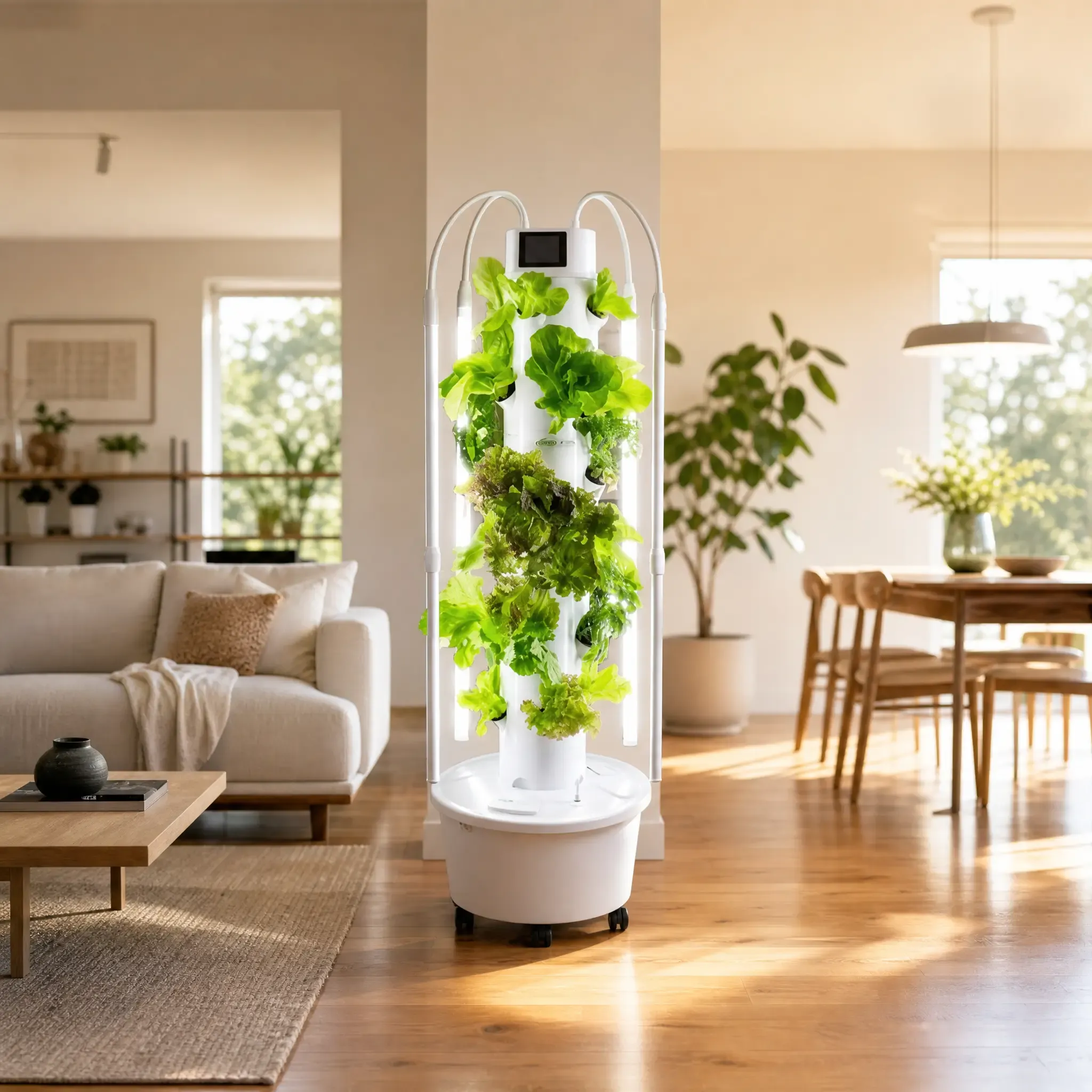
A hydroponic tower is a vertical, soil-free growing system that pumps nutrient-rich water from a base reservoir to the top, letting it trickle past plant roots before recirculating. Stacking 24 to 96 planting sites in a few square feet, it grows leafy greens and herbs year-round indoors — using up to 90% less water than soil gardening.
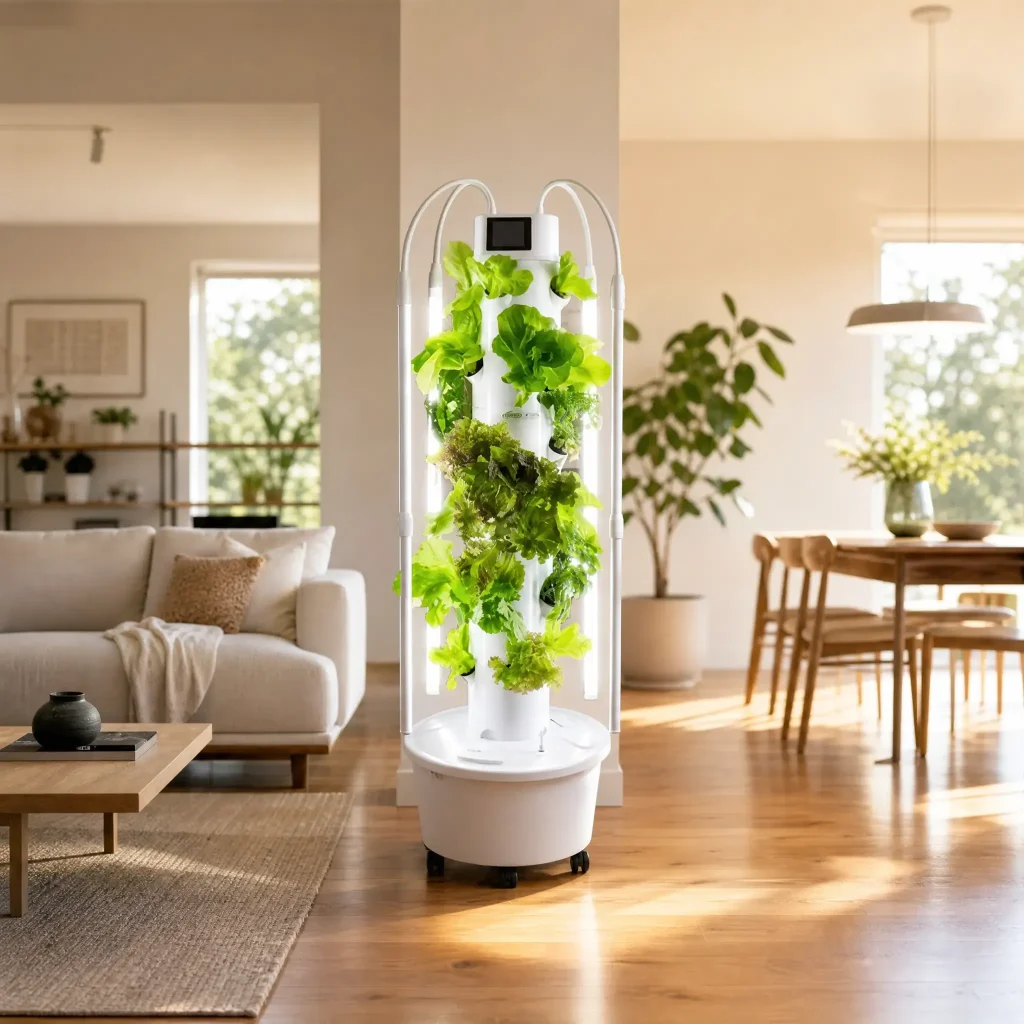
A hydroponic tower is a tall, upright column with planting openings stacked around its sides. Each opening holds a seedling in a net pot, usually cradled in a small piece of inert material — rockwool, coco coir, or a reusable grow plug. No soil. The roots hang into the tower’s interior, where nutrient-rich water flows past them on a timer.
Most home hydroponic tower systems include:
Here’s the mental shift that matters: in soil, plants go hunting for water and minerals. In a tower, you deliver everything to them. That’s the whole job — the right balance of nutrients, oxygen, moisture, light, and temperature, measured rather than guessed.
Almost every home tower runs the same recirculating loop. Learn this cycle and you understand 90% of tower gardening:
Because the water recirculates instead of draining away, a tower can use up to 90% less water than conventional field growing, according to the University of Arizona’s Controlled Environment Agriculture Center. Your actual usage still depends on plant size, evaporation, and how often you dump and refresh the reservoir — but the closed loop is the reason towers sip water instead of gulping it.
Want the deeper mechanical breakdown? See how hydroponic towers work.
Shoppers trip over these two terms constantly, because marketing uses them interchangeably. They’re not the same thing:
| Hydroponic Tower | Aeroponic Tower | |
|---|---|---|
| How roots get fed | Nutrient solution flows, trickles, or drips over the roots | Roots hang in air and get misted by spray nozzles |
| Root environment | Roots stay moist, sometimes partly submerged | Roots suspended in humid air get maximum oxygen |
| Clog risk | Low — wide channels, few tiny openings | Higher — mist nozzles can clog from mineral buildup |
| Forgiveness | A pump hiccup leaves roots damp for a while | Roots dry out fast if misting stops |
| Typical maintenance | Rinse channels, check pump | Inspect and clean nozzles regularly |
My take: for a first tower, the simpler hydroponic drip/trickle design wins. Aeroponics can grow slightly faster, but the nozzle maintenance isn’t worth it until you’ve run a system for a season. Either way, judge a product by how it delivers water, not by the buzzword on the box.
Leafy greens and compact herbs. Full stop. They’re fast, they stay small, they don’t need pollination, and they forgive beginner mistakes. Here’s a realistic cheat sheet — harvest times are from transplanting a healthy seedling, per UF/IFAS Extension vegetable guidance:
| Crop | Type | Days to first harvest | Notes |
|---|---|---|---|
| Leaf lettuce | Green | 21–28 | The perfect first crop; harvest outer leaves and it keeps producing |
| Arugula | Green | 21–30 | Fast and spicy; bolts in heat, so keep it cool |
| Bok choy | Green | 25–30 | Compact heads fit tower spacing well |
| Spinach | Green | 25–35 | Likes it cool; struggles above 75°F |
| Kale (baby) | Green | 30–40 | Pick young leaves; full-size kale gets bulky |
| Basil | Herb | 25–30 | Pinch the tops often or it shades its neighbors |
| Cilantro | Herb | 25–30 | Bolts fast in warmth; succession-plant every 2–3 weeks |
| Parsley | Herb | 30–40 | Slow to start, then produces for months |
| Mint | Herb | 30+ | Vigorous — harvest aggressively so it doesn’t bully neighbors |
| Strawberries * | Fruiting | 60–90 | Everbearing varieties; needs strong light and airflow |
| Dwarf cherry tomatoes * | Fruiting | 60–80 | Compact/determinate varieties only; needs support and pruning |
| Compact peppers * | Fruiting | 70–90 | Needs the brightest spots on the tower |
* Fruiting crops are a level up: they want more light, more nutrients, and sometimes hand-pollination indoors. Totally doable — just don’t start there.
And the no-go list for a standard home tower: corn, pumpkins, melons, large vining squash, most root vegetables (carrots, potatoes), and woody shrubs. Wrong size, wrong root structure, wrong support needs.
For the full crop-by-crop breakdown, read what you can grow in a hydroponic tower and best herbs for a hydroponic tower.
Both work. The right answer depends on your climate, your space, and how much control you want:
| Factor | Indoor Tower | Outdoor Tower |
|---|---|---|
| Light | Needs LED grow lights, 12–16 hrs/day for greens | Free sunlight — 6+ hours of direct sun is ideal |
| Season | Year-round, regardless of weather | Limited by frost dates and heat waves |
| Control | Stable temperature, humidity, and light | Wind, rain, and heat swings to manage |
| Pests | Fewer, but aphids and fungus gnats still find a way | Full cast: caterpillars, beetles, mildew, and more |
| Extra costs | Electricity for lights and pump | Possible shade cloth, wind protection, or heaters |
| Best for | Apartments, cold climates, consistent harvests | Patios and balconies with good sun |
Two practical notes people miss. First, weight: a 9.2-gallon reservoir holds about 77 pounds of water alone, plus the tower and plants. Put it on a floor that can handle that, and keep it level. Second, electricity and water near each other: indoors, route cords safely and assume small splashes will happen.
Do it in this order and you’ll avoid the classic beginner mistake — filling every planting site on day one, then fighting chaos for a month.
Match planting sites to your space and appetite, not your ambition. Check ceiling height, reservoir capacity, how easy the pump is to reach, and whether replacement parts exist. A bigger tower isn’t better if the lower sites end up shaded and airflow-starved. If you’re new, start with a 24-site tower — see hydroponic towers for beginners.
Sow into clean, damp starter plugs and keep them moist, not soggy. Once seedlings emerge, give them strong light immediately — tall, leaning, pale seedlings are screaming for more light. Transplant only the sturdy ones.
Build it, fill the reservoir with plain water, and run the pump before any plants go in. Confirm water reaches every level and drains back without leaks. Check the timer, tubing connections, and drainage now — not when roots are depending on it.
Use nutrients formulated for hydroponics and follow the label’s mixing order — more fertilizer does not mean faster growth, and an over-strong mix burns roots. After mixing, test pH (aim 5.5–6.5, the availability window cited by Missouri Extension’s hydroponic nutrient guide G6984) and EC (0.8–2.0 mS/cm for most crops). Full details: hydroponic tower nutrients: EC, pH & PPM cheat sheet.
Move seedlings in once roots are established but not root-bound. Roots should reach moisture without burying the plant crown deep in the net pot. Put aggressive growers (mint, basil) where they can’t shade smaller plants, and heavy fruiting crops low on the tower where they’re easier to support.
Towers reward routine, not hovering. Once a week: check water level, test pH and EC, glance at the pump and tubing, look at roots and leaf undersides. Top up with plain pH-balanced water between reservoir changes, and adjust nutrients by measurement — never by guess.
This is the skill that separates thriving towers from sad ones, and it’s simpler than it sounds. Two numbers run the show:
Test after mixing, make small adjustments, and re-test — never dump in big corrections. Keep the solution around 65–72°F (18–22°C); warm water holds less oxygen, and low oxygen plus strong nutrients is how root rot starts. Refresh the full reservoir every 1–2 weeks rather than endlessly topping up, because plants drink water faster than they absorb minerals and the mix drifts over time.
The complete walkthrough — mixing order, the PPM scale trap, crop-by-crop EC targets — lives in our nutrients, EC, pH & PPM cheat sheet.
More even coverage than you think. A tall tower is a lighting puzzle: the top basks while the lower and inner sites sit in shadow. What works:
Worried about the power bill? A small pump and LED setup typically costs a few dollars a month. We did the full math in how much electricity a hydroponic tower uses — spoiler: at the EIA’s U.S. residential average of about $0.17 per kWh (2025; your state may be higher or lower), most home towers run for less than a streaming subscription.
Every tower grower meets these sooner or later. None are fatal if you catch them early:
Green slime shows up wherever light hits nutrient-rich water. Cover unused planting holes, use an opaque reservoir, and block light leaks around gaps. Fixing the light leak beats scrubbing algae forever.
Brown, slimy, foul-smelling roots mean low oxygen, too-warm water, or poor sanitation. Healthy roots are usually pale (some nutrients stain them — that’s normal). Check water temperature, circulation, and cleanliness; pull badly affected plants before it spreads through the shared reservoir.
Tower plants dry out fast with no irrigation. Check the pump intake, tubing, filters, and timer at the first sign of wilting. Keeping a spare pump on hand is cheap insurance.
Dark, scorched leaf tips and curling can mean the solution is too strong — but heat stress looks similar. Test the reservoir EC before you act.
One side thriving while the other sulks usually means uneven light, restricted flow, or a bully plant hogging resources. Rotate the tower, prune aggressively, and don’t be sentimental about removing a hog.
No soil doesn’t mean no bugs. Aphids, fungus gnats, thrips, spider mites, and whiteflies all visit indoor towers. Inspect new plants before they go in, and check leaf undersides weekly.
Light cleaning is ongoing: pull dead leaves, wipe drips, and keep the reservoir covered. Do a full reset between crops (or when things look grimy):
Never mix cleaning chemicals unless the labels explicitly say it’s safe. And rinse like you mean it — residue is worse than the grime was.
Honest answer: it depends on what you eat and how you feel about tinkering.
A tower earns its keep if you regularly buy fresh herbs and salad greens — the two most expensive, most perishable things in the produce aisle — and you’ll genuinely enjoy a 10-minute weekly routine of testing water and pinching basil. A $4 clamshell of basil that wilts in three days versus snipping what you need, minutes before dinner: that’s the trade that pays for the tower.
It’s a poor fit if you want large root crops, heavy vines, or a garden you can ignore for a month. And start small: fill a third of the sites with lettuce, basil, and bok choy first. Get germination, nutrients, lighting, and harvesting dialed in. Expand only after the tower runs itself for a few weeks without drama.
No. Towers use mineral-rich water instead of soil. Seedlings sit in a small amount of inert material like rockwool or coco coir for support, but it provides no nutrition — the water does that job.
Yes — that’s one of the main reasons people buy them. You’ll need full-spectrum LED grow lights on a timer (12–16 hours daily for greens), decent airflow, and a spot where the occasional splash won’t matter.
Less than most people expect. A small water pump plus LED grow lights typically costs a few dollars a month at average U.S. rates. See the full breakdown in how much electricity a hydroponic tower uses.
Leaf lettuce. It germinates fast, stays compact, needs no pollination, and you can harvest outer leaves for weeks while the plant keeps producing. Basil and arugula are close seconds.
Compact or dwarf cherry tomato varieties, yes — with strong light, pruning, structural support, and (indoors) hand-pollination. Standard indeterminate tomatoes will outgrow a home tower fast. Check your tower’s weight and spacing limits first.
It depends on the tower design, but many home systems run the pump in cycles — for example, 15 minutes on and 15 off during daylight, less at night. Follow your manufacturer’s starting schedule, then confirm roots stay moist but get air between cycles.
They can. Skipping soil eliminates soil-dwelling pests, but aphids, spider mites, thrips, whiteflies, and fungus gnats happily visit indoor towers too. Weekly leaf checks catch problems while they’re small.
Leafy greens like lettuce and arugula are typically ready 3–4 weeks after transplanting a seedling. Herbs take a bit longer to hit their stride, and fruiting crops need 2–3 months. Add 1–2 weeks if you’re starting from seed.
Research describes general methods; it does not verify any specific model, product claim or customer outcome.
Related reading: how hydroponic towers work, what you can grow in a hydroponic tower, best herbs for a hydroponic tower, nutrients, EC, pH & PPM cheat sheet
We reviewed source material on 2026-10-04.

