Address
304 North Cardinal
St. Dorchester Center, MA 02124
Work Hours
Monday to Friday: 7AM - 7PM
Weekend: 10AM - 5PM
Address
304 North Cardinal
St. Dorchester Center, MA 02124
Work Hours
Monday to Friday: 7AM - 7PM
Weekend: 10AM - 5PM
Brown slimy roots or green film on the tank? Learn how to tell root rot from algae in your hydroponic tower — and the exact fixes for each.
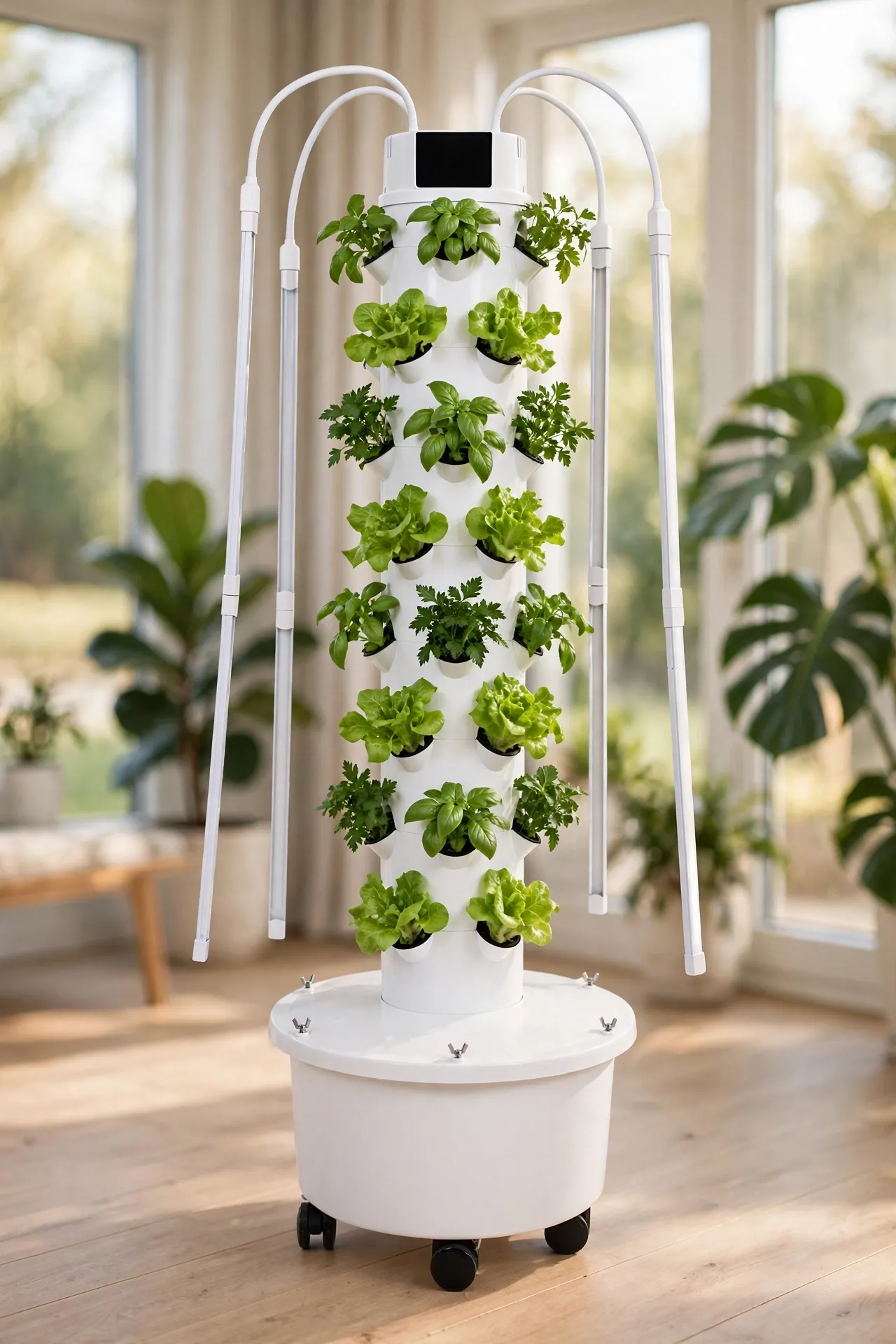
Root rot and algae both look alarming, but only one usually kills plants. Root rot — brown, slimy, foul-smelling roots — destroys the root system and needs immediate action. Algae — green film on tank walls and net cups — is mostly cosmetic and rarely harms plants directly. They need completely different fixes.

Start with what healthy looks like: hydroponic roots should be white or cream-colored, firm, and covered in fine fuzzy root hairs. Root rot is the opposite of all three. The roots turn brown to black, feel slimy or mushy, and give off a foul, musty or rotten-egg smell. A classic field check: gently roll a brown root between your fingers — if the outer layer slips off and leaves a thin stringy strand behind, the root tissue is dead.
Above the waterline, the plant tells the same story. Leaves wilt even though the reservoir is full — because a rotted root system can’t take up water no matter how much is available. Growth stalls, and leaves yellow from the whole plant at once rather than in the neat patterns of a nutrient deficiency (we mapped those patterns in our yellow-leaf diagnosis chart).
The usual culprit is Pythium, a water mold that thrives in warm, oxygen-poor water. Research from Cornell-associated e-GRO work on hydroponic basil and spinach puts the target root-zone temperature at 68–75°F (20–24°C) and recommends dissolved oxygen above 6 ppm, ideally 8–9 ppm — because warm water holds less oxygen, and low oxygen is what lets Pythium get established. Root injuries, dead organic matter, and contaminated seedlings all give it an entry point.
One honest note before you start treating: a plant whose entire root mass has gone brown and mushy rarely recovers. The fix below is for catching rot early and — more importantly — stopping it from reaching the rest of your tower.
Algae is far less dramatic. It shows up as a green — sometimes brown or reddish — film or mucus-like coating on tank walls, net cups, tubing, and grow media. University of Central Florida hydroponics researchers describe it as a mucus-like substance ranging from clear to green, visible on the reservoir walls and roots.
Here’s the key difference in kind: algae is a simple photosynthetic organism, not a pathogen. It needs exactly three things — light, water, and nutrients — and a hydroponic tower hands it all three. Wherever light reaches your nutrient solution, algae will eventually colonize.
And here’s what surprises most growers: algae rarely hurts your plants directly. It doesn’t attack roots. Heavy growth can compete for nutrients, clog narrow passages, and in neglected systems create a film that harbors other microbes — but a tower with green tank walls and healthy white roots is a cosmetic problem, not an emergency. The algae is really a messenger: it’s telling you light is leaking into your nutrient solution somewhere.
Pull one plant and run through this table. Check the roots themselves, not just the tank.
| What to check | Root rot | Algae |
|---|---|---|
| Where it shows up | On the roots themselves | On surfaces: tank walls, net cups, tubing, media |
| Color and texture | Brown to black, slimy and mushy; outer root skin slips off | Green (sometimes brown/red), thin film or mucus coating |
| Smell | Foul — musty or rotten-egg | Little to no smell |
| Plant symptoms | Wilting despite a full reservoir; stunting; whole-plant yellowing | Plants usually look fine; growth may slow only in heavy cases |
| Danger level | High — can kill plants and spread plant to plant | Low — mostly cosmetic; a sign of light leaks |
| Root cause | Warm water, low oxygen, pathogens like Pythium | Light hitting the nutrient solution |
What this table can’t tell you: both problems can show up at the same time, and the same neglect causes both — a warm, dirty, stagnant reservoir grows algae on the walls and rots the roots. Algae doesn’t cause root rot, but finding one is a good reason to check for the other. Also, don’t diagnose by color alone: roots stained brown by nutrients will rinse clean and feel firm, while rotted roots stay slimy and smell bad. Texture and smell are the real tests, not color.
Four conditions invite it, and they usually arrive together:
Notice what’s missing from that list: nutrients. Root rot is not caused by “too much fertilizer,” and dumping in extra nutrients to “strengthen” a rotting plant just feeds the problem. If your pH and EC read fine but the plant is wilting, look at the roots and the reservoir temperature — the chemistry isn’t the issue.
An honest caveat: pod count is not a harvest guarantee, and no rescue routine saves every plant. Prevention — cool, clean, circulating water — beats any cure, every time.
Good news: this fix is simpler, because algae has one non-negotiable requirement you can take away.
Both problems share the same prevention playbook. None of this is complicated — it’s just consistent:
A tower with dozens of planting sites gives you dozens of chances for something to go sideways — but the growers who check their water and peek at their roots once a week catch both root rot and algae while they’re still small. That’s the whole secret. There isn’t another one.
For more troubleshooting walkthroughs, browse our Growing Guides.
We reviewed source material on 2026-10-15.
Research describes general methods; it does not verify any specific model, product claim or customer outcome.
Sometimes, if you catch it early. Trim the dead roots back to firm white tissue, clean the whole system, remix fresh solution, and cool the reservoir. New white root tips within 7–10 days mean it’s recovering. Plants with most of their root mass gone brown and mushy rarely recover — remove them so they don’t infect their neighbors.
Rarely. Algae is a cosmetic issue — it doesn’t attack roots or poison plants. Heavy growth can compete for nutrients and clog narrow passages, and it signals light is leaking into your nutrient solution. Block the light with opaque covers and scrub it away during your next reservoir change.
Rinse them. Nutrient staining rinses off and the roots feel firm underneath. Rot doesn’t rinse clean — the roots stay slimy and smell foul. Texture and smell are the real tests, not color.
No — algae doesn’t cause root rot. But the same neglected conditions (warm, dirty, stagnant water) invite both, so finding one is a good reason to check for the other. Green tank walls alone don’t mean your roots are rotting; pull a plant and look at the roots themselves.
Food-grade hydrogen peroxide is used by some growers for cleaning between grows and light algae treatment, but it stresses plant roots and doesn’t fix the underlying cause — algae comes back wherever light still reaches the water. If you use it, follow the product label and dose conservatively. For algae, light-blocking beats chemicals; for rot, cool clean water beats chemicals.
If most of the root mass is brown and mushy, yes — they rarely recover and can spread pathogens to neighboring plants. Remove them, don’t reuse their grow media, and sterilize your tools. Save your effort for the plants that still have healthy white roots to work with.
Because light is still reaching the nutrient solution somewhere. Cleaning removes what’s there, but only opaque covers on every light path — reservoir lid, tubing, exposed net cups — prevent regrowth. If it returns to the same spot, there’s still a light leak at that spot.
Aim for below 72°F (22°C). Cornell-linked e-GRO research targets 68–75°F root-zone temperatures with dissolved oxygen above 6 ppm for hydroponic leafy crops — above ~75°F, water holds less oxygen and Pythium species thrive. Keep the tank away from heat sources and direct sun.

