Address
304 North Cardinal
St. Dorchester Center, MA 02124
Work Hours
Monday to Friday: 7AM - 7PM
Weekend: 10AM - 5PM
Address
304 North Cardinal
St. Dorchester Center, MA 02124
Work Hours
Monday to Friday: 7AM - 7PM
Weekend: 10AM - 5PM
A hydroponic tower grows leafy greens and herbs best — lettuce, kale, spinach, basil, parsley, and cilantro — plus compact fruiting crops like strawberries and dwarf peppers. Skip root vegetables such as carrots and potatoes, which need soil depth, and vining tomatoes unless you add support. Match the crop to the pocket size and light, and towers stay productive year-round.
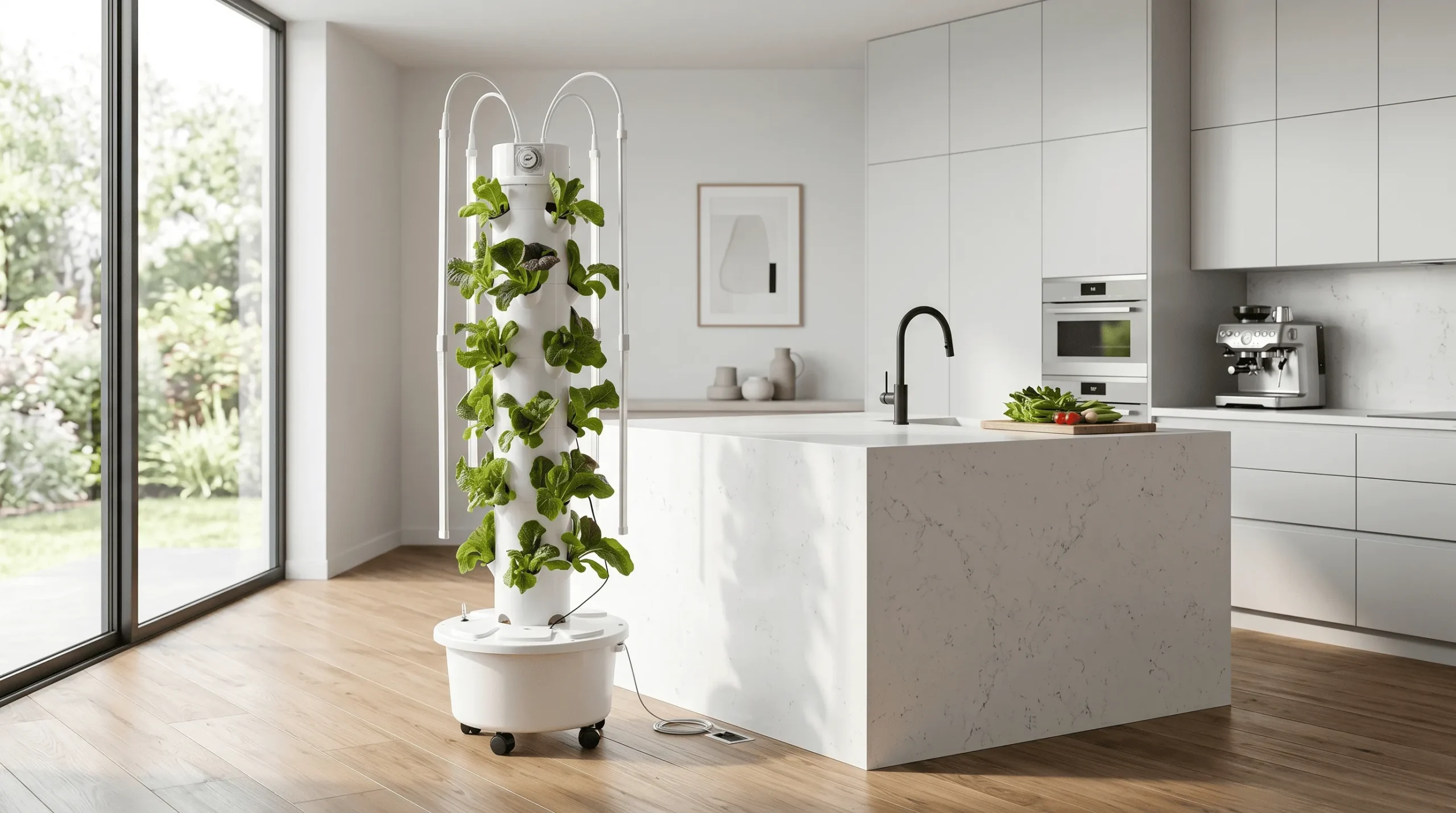
Short answer: You can grow herbs, leafy greens, and compact fruiting crops like strawberries in a hydroponic tower. Basil, mint, lettuce, spinach, and kale are the easiest wins for beginners — most are ready to harvest within 30 to 45 days of planting. Skip root vegetables and large vining plants. Towers reward compact crops with short growing cycles, and everything below is the detail behind that rule.
Picking what to grow is the most fun part of starting a tower — and the easiest place to go wrong. The tower itself doesn’t care what you plant. Light, space, and your patience do. Get those three aligned and the tower practically runs itself.
Three traits make a crop tower-friendly: it stays compact, it has a short growing cycle, and it doesn’t need deep roots or heavy structural support. That description fits herbs and leafy greens almost perfectly, which is why they’re the default answer — and the right one — for most home growers.
Here’s the cheat sheet I wish someone had handed me on day one:
| Crop | First harvest | Difficulty | Why it works in a tower |
|---|---|---|---|
| Lettuce (leaf types) | 30–45 days | Easy | Cut-and-come-again harvesting; shallow roots; thrives at 65–75°F |
| Arugula | 25–35 days | Easy | One of the fastest crops you can grow; tolerates cooler conditions |
| Spinach | 35–45 days | Easy | Compact rosette habit fits net pots well; harvest outer leaves first |
| Kale (baby leaf) | 30–40 days | Easy | Harvest young leaves repeatedly; full-size heads need more room |
| Basil | 30 days for first pinch | Easy | Responds to pinching by branching; loves warmth and 14–16 hours of light |
| Mint | 60–90 days from seed | Easy | Nearly indestructible; contained pots stop it spreading the way it does outdoors |
| Parsley | 70–90 days | Easy | Slow to germinate (up to 3 weeks) but steady and productive once going |
| Cilantro | 45–60 days | Easy–moderate | Fast but bolts in heat; succession-plant every 2–3 weeks for steady supply |
| Chives | 60–80 days | Easy | Snip and it regrows; one planting lasts months |
| Strawberries (everbearing) | 60–90 days from transplant | Moderate | Compact crowns suit vertical pockets; needs 12–14 hours of strong light |
| Cherry tomatoes (dwarf varieties) | 60–80 days from transplant | Moderate | Only compact/determinate types; needs support and hand pollination indoors |
| Peppers (compact varieties) | 70–90 days from transplant | Moderate | Slow to start but productive; benefits from the warmest, brightest tower level |
Harvest times assume seedlings or transplants started indoors at normal room temperature. Growing from seed adds roughly 1–3 weeks depending on the crop.
Herbs are the highest-value thing a tower can produce, and I don’t just mean flavor. A $4 plastic clamshell of basil at the grocery store is about two servings. A single healthy basil plant in a tower gives you that every week for months. The economics are not close.
Start with basil. It’s the most forgiving herb for beginners: it germinates fast, grows visibly week to week, and tells you clearly what it wants (droopy leaves = thirsty or cold). Pinch the top once it hits 6–8 inches and it branches into a bush instead of a stalk. One plant, pinched regularly, feeds a household’s pesto habit.
Mint is the other no-brainer, with one caveat: outdoors it’s a garden thug that takes over beds. In a tower, each plant is locked in its own net pot, so the invasiveness problem disappears entirely. Give it its own pocket and ignore it; it will thrive on neglect.
Round out the herb section with parsley and chives for everyday cooking, and cilantro only if you actually cook with it regularly — cilantro bolts (flowers and turns bitter) when it gets warm, so plant a few pockets every two to three weeks rather than one big batch. Thyme and oregano work too, though they’re slower and prefer slightly drier conditions than the water-loving greens.
If you want the deep dive on varieties, our guide to the best herbs for hydroponic towers breaks down which cultivars perform best indoors.
Leafy greens are where a tower starts paying rent. Lettuce, arugula, spinach, and kale all share the traits towers love: shallow roots, compact growth, and harvest cycles measured in weeks, not months.
Grow loose-leaf lettuce, not head lettuce. Butterhead and romaine want to form dense heads that crowd a vertical pocket; loose-leaf types like ‘Salad Bowl’ or oakleaf let you harvest outer leaves while the center keeps producing. This “cut-and-come-again” method stretches one planting across 2–3 months. Cornell University’s controlled-environment agriculture program notes lettuce performs best around 65–75°F — conveniently, normal indoor temperatures.
Arugula deserves special mention as the fastest crop on the list. Seed to salad in under a month, and it actually prefers cooler conditions, making it perfect for a tower near a drafty window in winter. Spinach is similarly quick but dislikes heat; if your tower runs warm, grow it in the cooler months.
One practical note: greens are light-hungry but not light-greedy. Twelve to fourteen hours of decent light daily keeps them compact and flavorful. Stretch past 16 hours and some varieties start thinking about bolting. If you’re running LED grow lights on a timer, our electricity cost breakdown shows what those hours actually cost — typically just a few dollars a month at the U.S. Energy Information Administration’s national average residential rate of about 17 cents per kWh, though your state’s rate will differ.
Yes — with honest expectations. Fruiting crops are the intermediate level of tower growing: entirely doable, but they ask more of you and of the system than a pot of basil does.
Strawberries are the best fruiting crop for towers. Everbearing varieties (like ‘Albion’ or ‘Seascape’) produce in flushes rather than one big June crop, and their compact crowns fit vertical pockets naturally. They want 12–14 hours of strong light and slightly higher nutrient strength than greens — around 1.2–1.8 mS/cm EC once fruiting, versus 0.8–1.2 for lettuce. Our nutrients guide has the full EC and pH cheat sheet by crop.
Cherry tomatoes work only if you choose dwarf or determinate varieties bred for containers (‘Tiny Tim’, ‘Micro Tom’). A full-size indeterminate tomato will outgrow any tower and sulk about it. Even dwarfs need a small stake and — this surprises people — hand pollination indoors. No bees in your living room means you play bee: a gentle shake of the stem or an electric toothbrush behind the flower cluster every couple of days.
Peppers are the slow burn: 70–90 days from transplant to first fruit, and they want the warmest, brightest spot on the tower. Worth it if you love fresh peppers; frustrating if you’re impatient.
The common thread: fruiting crops need more light (14–18 hours), more nutrients, and more attention than greens. Start them only after your first round of herbs and greens has succeeded. Confidence first, strawberries second.
A short list of things that look tempting and end badly in towers:
The beginner mistake isn’t usually picking a “bad” plant — it’s picking five ambitious plants at once. A tower with twelve struggling experiments teaches less than a tower with six thriving basics.
Work backward from your kitchen, not forward from a seed catalog. Open your fridge and look at what you actually buy every week: the wilting herbs, the $5 clamshell of spring mix, the cilantro you use half of before it goes slimy. That’s your planting list.
A good first tower for a cooking household: 4 pockets of basil, 2 of mint, 2 of parsley, 2 of chives, and the rest in loose-leaf lettuce and arugula. That mix covers daily cooking, harvests something every week, and — critically — everything on it is easy. You’ll be eating from it within a month, which is the whole point.
Salad household? Flip the ratio: mostly greens, a few herbs for garnish. The tower doesn’t care. Match the planting to the eating and maintenance stops feeling like maintenance.
Researchers at the University of Arizona’s Controlled Environment Agriculture Center have reported hydroponic lettuce yields roughly ten times higher per square foot than field-grown — which is the entire argument for vertical growing in one number. You don’t need a big system. You need the right plants in it.
Both. Herbs and leafy greens are the easiest, but compact fruiting vegetables — strawberries, dwarf cherry tomatoes, compact peppers — grow well too. What doesn’t work: root vegetables (carrots, potatoes), which need soil to swell, and large vining crops like melons.
Fast greens like arugula are ready in 25–35 days; lettuce and spinach in 30–45. Herbs take a bit longer — basil is pinchable at about 30 days, parsley and chives need 60–80. Fruiting crops are the slowest at 60–90 days from transplant.
No. Standard seeds work fine; there’s no such thing as “hydroponic seeds.” What matters is variety selection: choose loose-leaf over head lettuce, dwarf over full-size tomatoes, and everbearing over June-bearing strawberries.
Yes, and you should — variety is the point. Just group plants with similar needs: keep heavy-feeding fruiting crops (higher EC, more light) on the brightest level and easy greens together. Avoid mixing plants that want very different pH or nutrient strengths in one reservoir.
Flavor comes mostly from variety, freshness, and growing conditions — not the medium. Tower-grown basil harvested minutes before dinner tastes better than week-old store basil because it’s fresh, not because of how it was grown. We don’t claim hydroponics is more nutritious; the honest advantage is peak-freshness harvest.
It depends on the tower: compact home towers typically hold 24–40 planting sites, larger ones up to 96. Don’t fill every pocket on day one — start with half, learn the routine, then expand. Our complete hydroponic tower gardening guide walks through planning your first planting.
Mint or basil, and it’s not close. Mint tolerates almost any mistake; basil grows fast enough that you see progress weekly, which keeps beginners motivated. If you can keep one of those alive for a month, you’re ready for the full tower.
Research describes general methods; it does not verify any specific model, product claim or customer outcome.
Related reading: best herbs for a hydroponic tower, hydroponic towers for beginners, complete hydroponic tower gardening guide, hydroponic tower nutrients: EC, pH & PPM cheat sheet
We reviewed source material on 2026-10-04.

