Address
304 North Cardinal
St. Dorchester Center, MA 02124
Work Hours
Monday to Friday: 7AM - 7PM
Weekend: 10AM - 5PM
Address
304 North Cardinal
St. Dorchester Center, MA 02124
Work Hours
Monday to Friday: 7AM - 7PM
Weekend: 10AM - 5PM
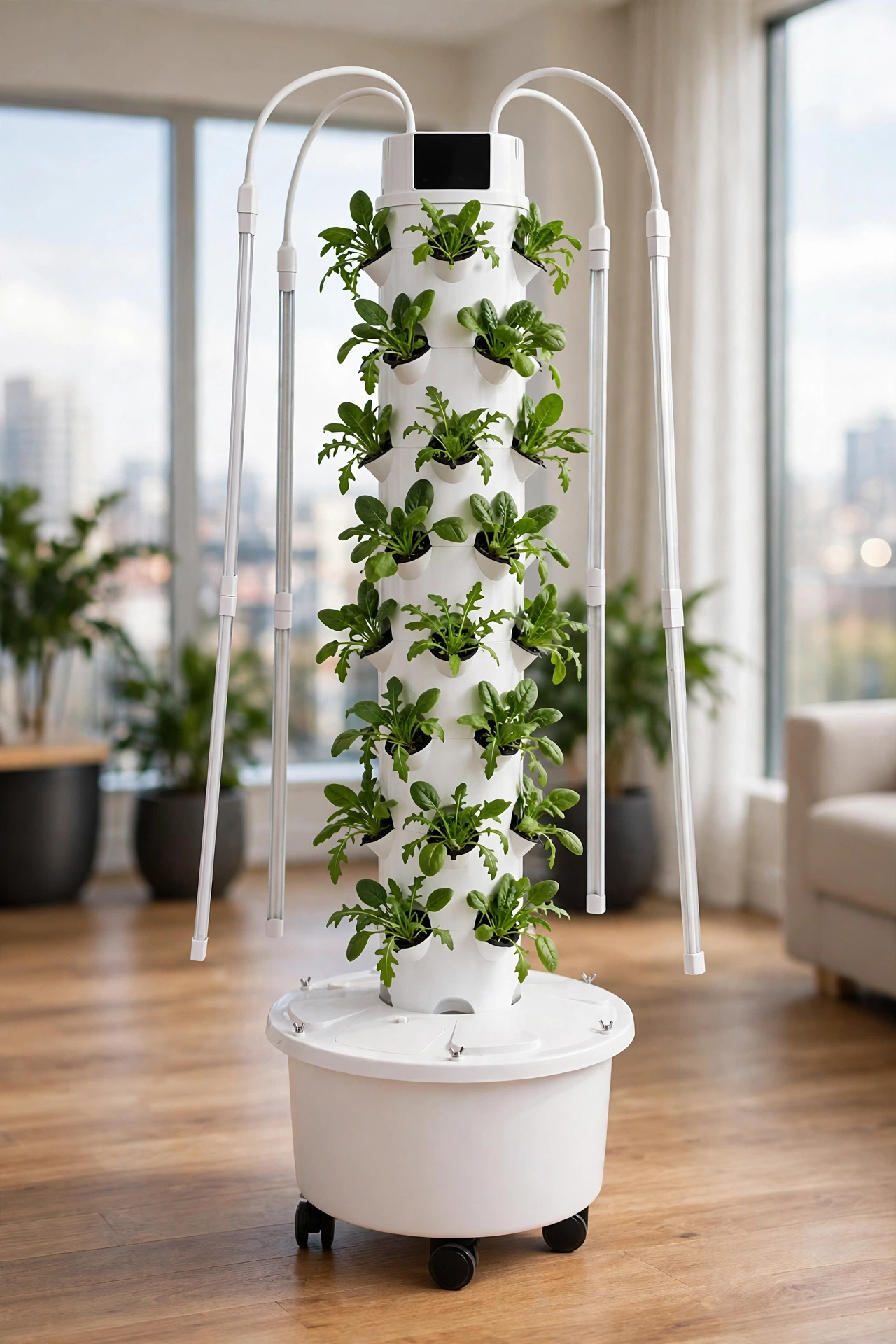
Quick answer: Fungus gnats in a hydroponic tower are beaten with a two-front approach: Bti (Bacillus thuringiensis israelensis) added to your reservoir or watering routine kills the root-feeding larvae, while yellow sticky traps catch the flying adults. Plan on four to six weeks of consistent treatment to break the life cycle completely — and skip the harsh sprays.
You didn’t do anything wrong. A hydroponic tower is a gnat’s dream neighborhood — always-moist grow media, warm roots, a little algae. This is also one of the most solvable pest problems in indoor growing, as long as you treat the larvae, not just the flies you can see.

Fungus gnats are small, dark, mosquito-like flies — adults are only about 1/8 inch (2–4 mm) long. They lay their eggs in moist growing media, and the larvae are the real troublemakers: translucent white maggots, up to about 1/4 inch long, with shiny black heads. According to the University of Minnesota Extension, the larvae feed on decaying plant matter and sometimes on plant roots, which can cause yellowing leaves, wilting, and slow growth in houseplants.
A hydroponic tower gives them everything they need: grow sponges or clay pebbles that stay wet around the clock, a warm humid tank below, and algae film on the lid as extra food. Seedlings and young transplants are most at risk — their small root systems can’t shrug off larval nibbling the way mature plants can.
One important distinction: the adults you see hovering are mostly a nuisance. They don’t bite, they don’t sting, and they don’t chew leaves. The damage happens underground, at the roots. That’s why spraying the flies — or just waiting for them to leave — never actually ends an infestation.
People mix these up constantly, and it matters, because fruit fly traps and gnat treatments aren’t the same thing. Here’s the quick field ID:
| Trait | Fungus gnats | Fruit flies |
|---|---|---|
| Color | Dark grey to black, slender | Tan to amber, rounder |
| Where they hover | Around grow media, net cups, tank lid | Around fruit, trash, drains |
| Larvae location | In moist media, on roots | In fermenting food or drains |
| Bite humans? | No | No |
Still not sure? Tap a net cup lightly — fungus gnats scatter upward in a little cloud, then settle back. Or try the potato-slice test from University of Kentucky Extension entomologist Jonathan L. Larson: lay a thin (roughly 1/4-inch) slice of raw potato on the media and check before it dries out. Tiny translucent larvae with black heads gathered underneath means fungus gnats.
Honest answer: for established, healthy plants, a light fungus gnat presence is mostly an annoyance. Larvae prefer decaying plant matter and algae, turning to living root hairs only when populations are high or roots are young and tender. Seedlings, fresh transplants, and stressed plants are where real damage shows up — stunted growth, sudden wilting, or a seedling that never takes off.
There’s also an indirect cost: gnats signal that something in your setup is staying too wet or too algae-covered — the same conditions that invite root rot. Treat the gnats, but read them as a nudge to tighten up tower hygiene. (If leaves are yellowing and you’re not sure gnats are the cause, our yellow leaves diagnosis chart walks through the other possibilities.)
Four approaches are worth your time, and they work best combined. The table shows what each does — and, just as important, what it can’t do.
| Method | What it targets | How it works in a tower | Limitation — what it can’t do |
|---|---|---|---|
| Bti (Bacillus thuringiensis israelensis) | Larvae | Soak Bti granules (“Mosquito Bits”) per the package label to make a tea, and add it with each reservoir top-up or water change | Does nothing to flying adults; needs reapplying for weeks to catch newly hatching larvae |
| Yellow sticky traps | Adults | Place small cards at the tower base and near the canopy; replace weekly | Won’t touch larvae in the media — a full trap with no other treatment just means more gnats are hatching |
| Moisture & algae control | Breeding habitat | Keep the tank lid closed, wipe nutrient spills, scrub algae off pods and lid, cover unused net cups | Can’t dry out a running tower the way you can dry out a houseplant — this is support, not a cure |
| Hydrogen peroxide drench (optional knockdown) | Larvae on contact | One-off drench of grow media with 1 part 3% hydrogen peroxide to 4 parts water | Not a long-term solution; overuse can damage roots and beneficial microbes — use sparingly, if at all |
Why Bti leads this list: it’s a naturally occurring soil bacterium that targets fly larvae specifically. The University of Minnesota Extension notes that Bti is safe for plants and pets and targets only fungus gnat larvae — so it won’t nuke your reservoir biology the way a broad insecticide would, and it’s a standard choice around edible crops when applied per the label.
Consistency beats intensity: the life cycle runs roughly three to four weeks at room temperature, with eggs hatching the whole time. One heroic weekend of treatment, then nothing, just resets the clock. Here’s the plan that breaks the cycle:
Set a weekly reminder for the Bti dose — stopping at week three because things “look fine” is the classic way infestations return by week five.
A short don’t-list, because the internet suggests some genuinely bad ideas for hydroponic setups:
Prevention is mostly housekeeping. None of this is dramatic, which is exactly why it works:
New to tower growing? Our hydroponic tower gardening guide covers the fundamentals, and what you can grow in a hydroponic tower helps you pick fast-establishing crops — vigorous seedlings outrun minor gnat pressure far better than slow starters.
No. Fungus gnats don’t bite, sting, or transmit diseases to people or pets. They’re a plant-root pest and a household nuisance — annoying, but not a health hazard.
Almost never indoors. A tower’s grow media stays moist year-round, so there’s no dry season to break the cycle for you. Without treatment, populations tend to build until something — usually the grower — intervenes.
Yes, when used per the product label. Bti is a naturally occurring bacterium that targets fly larvae specifically, and extension sources describe it as safe for plants and pets — no broad-spectrum insecticide residue, which is why it’s standard for food-growing setups. Read the label, dose as directed, don’t improvise.
Plan on four to six weeks of consistent treatment — the life cycle runs roughly three to four weeks at room temperature, so keep killing newly hatching larvae for at least one full cycle after the last adult disappears.
As a one-off media drench at 1 part 3% hydrogen peroxide to 4 parts water, it kills larvae on contact. But it’s a knockdown, not a cure — and repeated or reservoir-wide use can damage roots and beneficial microbes. Use it sparingly, if at all, and rely on Bti for the long game.
Usually one of three things: treatment stopped too early, a nearby houseplant is reinfesting the tower, or there’s a hidden breeding spot like a spill tray. Keep Bti going two weeks past the last trapped adult, and treat the whole growing area.
No — traps only catch flying adults. Great for monitoring and cutting the egg-laying population, but the larvae are untouched. Pair traps with a larva-targeting treatment like Bti.
We reviewed source material on 2026-10-16.
Research describes general methods; it does not verify any specific model, product claim or customer outcome.
New to tower growing? Browse the Growing Guides archive for setup, crop, and troubleshooting walkthroughs.

