Address
304 North Cardinal
St. Dorchester Center, MA 02124
Work Hours
Monday to Friday: 7AM - 7PM
Weekend: 10AM - 5PM
Address
304 North Cardinal
St. Dorchester Center, MA 02124
Work Hours
Monday to Friday: 7AM - 7PM
Weekend: 10AM - 5PM
Carrots, corn, pumpkins, and fruit trees will waste your tower's pockets and nutrients. Here's the full avoid-list for hydroponic towers — why each crop fails, and what to grow instead.
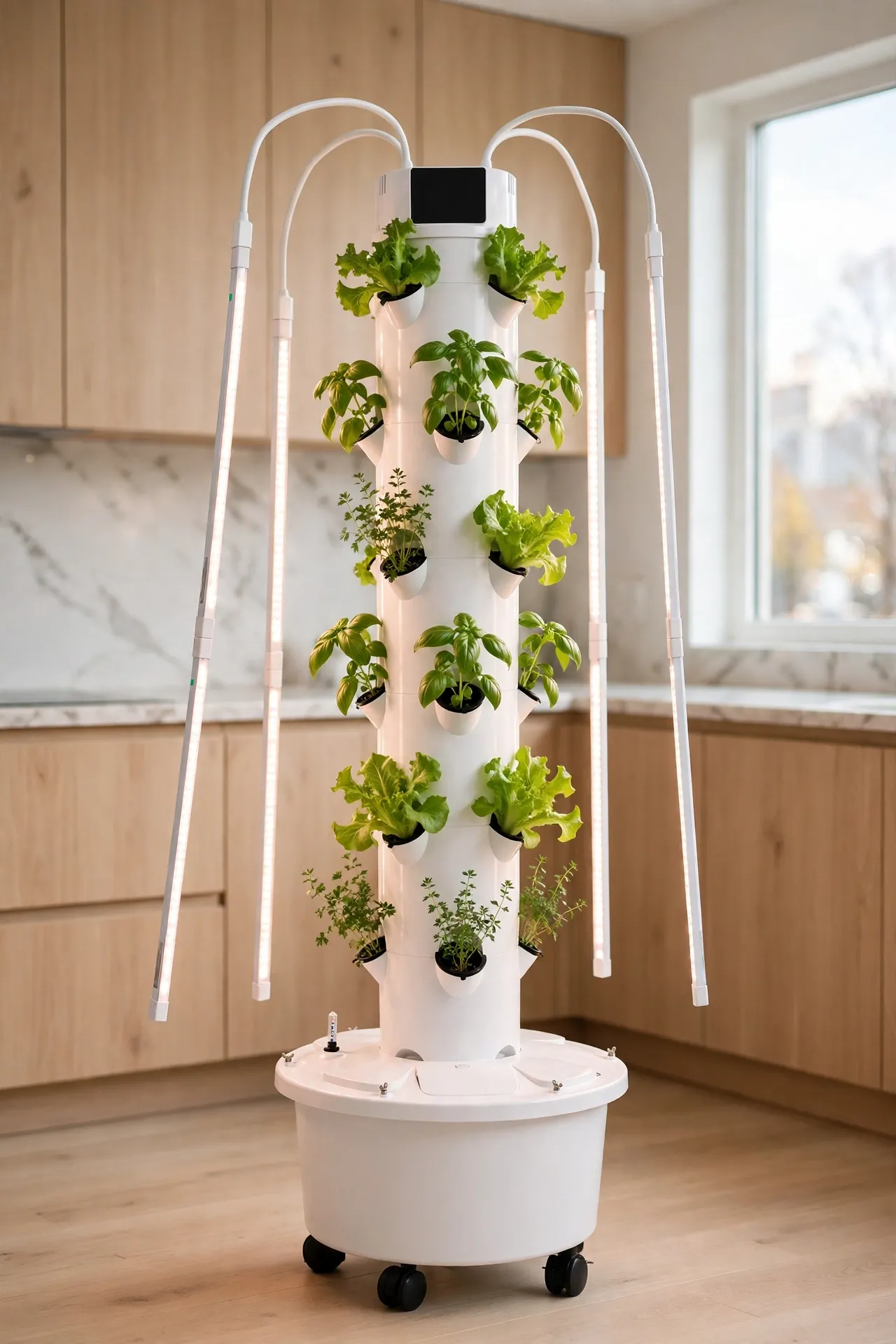
Short answer: Don’t plant anything that grows a thick edible root underground (carrots, potatoes, beets), anything that gets huge or heavy (corn, pumpkins, watermelons, fruit trees), or aggressive spreaders like mint. A tower is a vertical column of small planting pockets fed by a pump — roots hang in mist or a thin film of water, so the winners are compact, shallow-rooted, fast crops like lettuce, basil, and strawberries. Below is the full avoid-list, the reason behind each one, and what to grow instead.
If you are still deciding what belongs in your tower at all, start with what you can grow in a hydroponic tower — this guide is its mirror image: everything that sounds fun but wastes your tower’s pockets, water, and electricity.

Carrots, potatoes, beets, turnips, and parsnips grow their harvest underground. That is the whole problem. A tower pocket is typically only a few inches wide and deep, with the plant’s roots dangling into a shared column of flowing nutrient water. There is nothing for a carrot to push against, no depth for a beet to swell into, and no darkness for a potato tuber.
What you get instead of a harvest:
This isn’t a hydroponics-wide ban, by the way. Fast, shallow crops like radishes can work in deep media-bed or Dutch-bucket hydroponic setups, where the roots have real depth to develop. Towers just don’t offer that geometry. If you want potatoes, grow bags of soil on a balcony will beat a tower every time.
Grow this instead: scallions (harvested for their green tops, not bulbs), baby leaf greens, and watercress — all shallow-rooted, fast, and happy in a pocket. Beet lovers get a consolation prize: beet greens grow beautifully in towers even though the roots won’t.
Technically a corn seedling will sprout in a net pot. Practically, it is one of the worst things you can put in a tower, for four compounding reasons:
The verdict from growers who have tried: one ear of half-filled corn at the cost of a dozen ruined lettuce pockets. Plant corn in soil outside; keep the tower for crops that respect the vertical format.
Same family of problem as corn, different flavor. Vining cucurbits — pumpkins, winter squash, watermelons, full-size cucumbers — send runners 10 to 20 feet in every direction. In a tower, a single vine will smother neighboring pockets within weeks, blocking light from everything below it.
Then there is the weight problem. A ripening pumpkin weighs 10–20 pounds; a watermelon not much less. Tower pockets are designed to hold a few ounces of basil, not a bowling ball. The vine either snaps, the pocket cracks, or the fruit dangles until it rots against the tower wall. Even “compact” bush varieties of squash still need a couple of square feet of floor space each — which is precisely what a tower is trying to save.
Indoor pollination is the third strike. These plants make separate male and female flowers and need bees — or your paintbrush, daily, at the right hour — to set fruit. It is doable as a hobby project, but it turns your low-maintenance tower into a high-maintenance science experiment.
Grow this instead: strawberries. They fruit at pocket scale, hang nicely over the edge, and need no pollination heroics (a small fan or a gentle shake moves their self-fertile pollen). If you must vine, a compact patio cucumber trained on a separate trellis beside the tower is the sane boundary.
No — and this one surprises beginners more than it should, because dwarf citrus and fig trees do grow well in containers. The key word is containers: a dwarf lemon wants a 5-gallon pot of real substrate, a woody root system that lives for years, and eventually a canopy several feet across.
A tower gives it none of that. The pocket is too small for a woody root ball, the shared nutrient film is calibrated for fast leafy crops rather than a tree’s seasonal feeding cycle, and the tree will never fruit in a meaningful timeframe anyway — most fruit trees take 2–5 years from planting to first harvest. You would be babysitting a stick in a net pot for years.
Grow this instead: there is no tower substitute for an apple tree, and that is fine. Fruit trees belong in big pots or the ground; towers belong to fast, small, harvest-often crops. Different tools, different jobs.
Most herbs are tower all-stars — basil, cilantro, parsley, and thyme are practically the default planting. Two categories deserve caution:
Mint. Mint doesn’t fail in a tower; it succeeds too well. Its running roots (stolons) spread aggressively, and in a shared water column they can travel between pockets, invade the central column, and clog pump filters and drip lines. Experienced growers either give mint its own separate pot or dedicate one entire tower level to it and accept the takeover. If mint shares pockets with slower herbs, it will outcompete them for root space within a month or two.
Tall, fast bolters. Dill grows into a 3-foot feathery plume that shades everything below it and attracts aphids indoors; let it flower and it reseeds into every pocket. Fennel has the same habit. These aren’t impossible — they’re just rude neighbors. Grow them in a separate container, or harvest dill very young.
The general rule: in a shared reservoir, every plant shares water, nutrients, and light whether it wants to or not. One aggressive species sets the terms for everyone.
This is the most common “is it allowed?” question, and the honest answer is: allowed, but compromised. Leafy greens and fruiting plants want different things from the same reservoir:
| Leafy greens (lettuce, basil) | Fruiting plants (tomatoes, peppers) | |
|---|---|---|
| Nutrient strength (EC) | 0.8–1.4 mS/cm | 2.0–3.5 mS/cm (tomatoes) |
| Nitrogen style | High nitrogen for leaves | Higher potassium/phosphorus for fruit |
| Light appetite | Moderate (12–14 hrs) | High intensity (14–16+ hrs) |
| Temperature | Cool (60–70°F) | Warm (70–80°F) |
Run the reservoir hot and strong for tomatoes and your lettuce turns bitter and bolts; run it gentle for lettuce and your tomatoes stay small and pale. (The tomato EC range of 2.0–3.5 mS/cm comes from Missouri Extension’s hydroponic nutrient guide; lettuce prefers roughly 150–200 ppm nitrogen at pH 5.5–6.0, per e-Gro’s lettuce monitoring data.)
None of this means you can’t grow tomatoes in a tower — compact cherry varieties with pruning do fine. It means you should group crops by family: one tower (or one reservoir) for leafy greens and herbs, another for fruiting plants. Your yields will thank you.
| Don’t plant this | Why it fails in a tower | Plant this instead |
|---|---|---|
| Carrots, beets, turnips | No depth or firm medium for storage roots; rot risk | Scallion tops, baby greens, watercress |
| Potatoes | Need hilling, darkness, bulk soil | Grow bags of soil on the balcony |
| Corn | 7–10 ft tall, wind-pollinated, top-heavy, nutrient hog | Compact cherry tomatoes (pruned) |
| Pumpkins, winter squash, watermelons | 10–20 ft vines; fruit too heavy for pockets; need bees | Strawberries |
| Fruit trees | Years to fruit; woody roots need gallons of substrate | Big pots or the ground — different tool |
| Mint (shared with others) | Invades pockets, clogs pump filters | Its own separate pot |
| Dill, fennel (mature) | 3-ft plumes shade neighbors; aphid magnets | Harvest young, or separate container |
| Mushrooms | Not plants — need darkness, humidity, and substrate, the opposite of a bright tower | Oyster-mushroom grow kit on a shelf |
The pattern in the table above is the real lesson: towers reward crops that are compact, shallow-rooted, and harvested often. Leafy greens (lettuce, spinach, arugula, kale), culinary herbs (basil, cilantro, parsley, thyme), strawberries, and compact fruiting varieties like dwarf peppers and cherry tomatoes fit the format because the format was built around them — tight tiers, shared nutrient film, and vertical light.
If you are planning your first planting, read what you can grow in a hydroponic tower for the positive list, and how hydroponic towers work to understand why pocket size and reservoir sharing dictate so many of these choices.
No. Space isn’t the limiting factor — darkness, hilling, and bulk substrate are. A grow bag with soil will outperform any tower for potatoes at a fraction of the fuss.
Just in towers. Short, round carrot varieties can work in deep media-bed or wick hydroponic systems with 8+ inches of substrate. Towers don’t offer that depth, so skip them there.
A pruned cherry tomato or dwarf pepper plant, occupying two or three adjacent pockets with a small trellis. Anything larger starts stealing light and reservoir capacity from the rest of the tower.
Because it grows too well. Its runners spread through the shared water column into neighboring pockets and can clog pump filters. Give mint its own pot and it becomes one of the easiest plants you own.
Yes — this is one of the safer mixes. Both like moderate EC (roughly 1.0–1.8 mS/cm) and similar light. Just keep heavy-feeding fruiting plants like full-size tomatoes in a separate reservoir.
Yes, and they are one of the fastest payoffs: sow densely in net pots or shallow trays at tower-top light levels, harvest in 7–14 days. They barely touch the nutrient reservoir, so they coexist with almost anything.
Bulb onions need a dry curing phase and long day-length triggers that fight the tower’s always-wet, always-on environment. Scallions grown for green tops are the practical substitute and thrive in pockets.
We reviewed source material on 2026-10-04.
Research describes general methods; it does not verify any specific model, product claim or customer outcome.
Planning your first tower? Browse all growing guides for crop-by-crop settings.

