Address
304 North Cardinal
St. Dorchester Center, MA 02124
Work Hours
Monday to Friday: 7AM - 7PM
Weekend: 10AM - 5PM
Address
304 North Cardinal
St. Dorchester Center, MA 02124
Work Hours
Monday to Friday: 7AM - 7PM
Weekend: 10AM - 5PM
Growing fresh herbs at home changes how you cook: basil, parsley, and cilantro steps from the stove mean reaching for fresh flavor instead of dried jars, wasting less produce, and cooking more from scratch. A tower needs minutes of weekly care — top up the reservoir, check pH — and pays for itself in skipped grocery runs within a season.
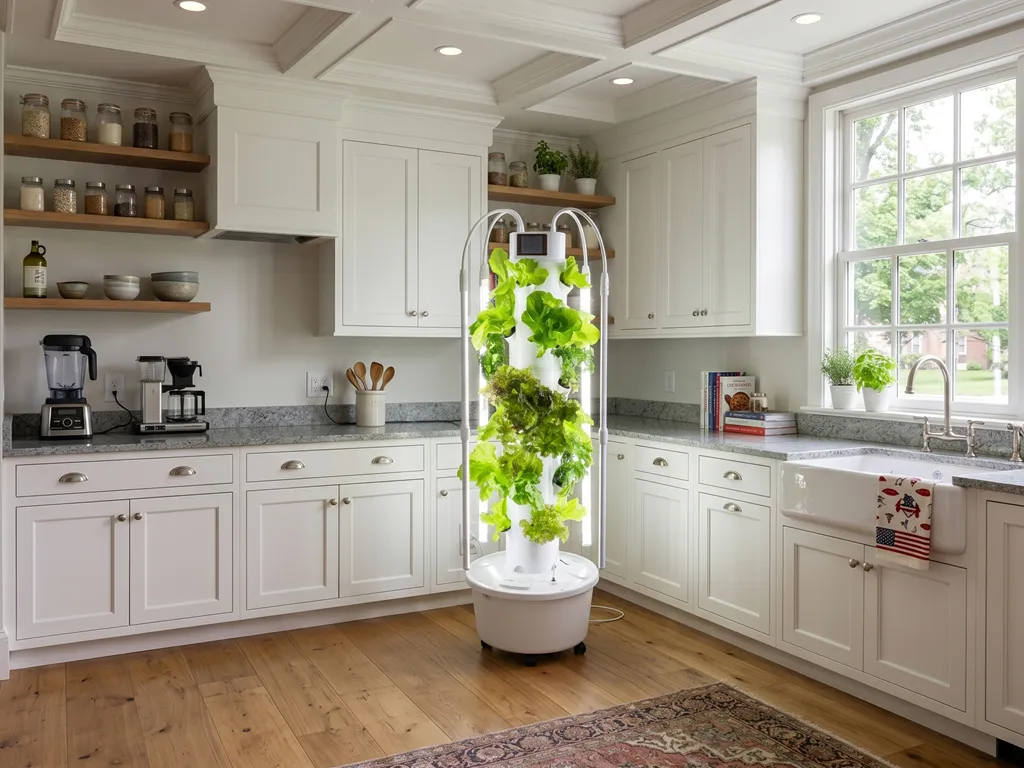
Growing fresh herbs at home is the smallest upgrade with the biggest payoff in the kitchen. You stop throwing away wilted $4 clamshells, you season food the second you think of it, and a living plant on the counter quietly nudges you to cook more. Here is why that tiny habit sticks when bigger health kicks do not.
Not every meaningful change at home has to be dramatic. The ones that last usually start small. Fresh herbs are one of those small things, and they punch way above their weight.
It comes down to immediacy. Most of what is in the fridge was bought days ago and is slowly declining. A living herb plant is the opposite. It is growing, right there, while you cook.
That shifts meal prep from inventory management to something more alive. Dinner gets brighter with a handful of basil. Soup tastes finished with parsley instead of almost-done. Mint turns sparkling water into something you actually look forward to. None of these are complicated moves. They just require the herbs to be within arm’s reach.
And that is the whole trick. Proximity beats willpower, every time.
Usually, yes, and it is not close. A plastic clamshell of basil costs $3 to $4 at most U.S. supermarkets, and half of it often turns to slime before you use it. The USDA’s Economic Research Service estimates that 30 to 40 percent of the U.S. food supply is lost or wasted, and fresh herbs are among the worst offenders because they wilt within days of purchase.
One healthy basil plant, by contrast, can be harvested a few leaves at a time for months. You are not just saving the purchase price. You are eliminating the most wasted item in the produce drawer.
Do the rough math on a household that buys two clamshells a week. That is roughly $300 a year on herbs, much of it composted. A small home growing setup pays for itself on herbs alone, before you count a single head of lettuce.
Start with the ones that forgive beginners and get used constantly. This is the ranking I give anyone who asks:
| Herb | First harvest (from transplant) | Light needs | Why it earns its spot |
|---|---|---|---|
| Basil | 3–4 weeks | High: 12–16 hours | The workhorse. Pasta, pizza, salads, drinks. Nothing store-bought compares. |
| Mint | 2–3 weeks | Medium: tolerates less | Nearly indestructible. Keep it in its own pot or tower pocket — it will try to take over. |
| Chives | 3–4 weeks | Medium | Cut-and-come-again forever. Snip what you need and it regrows like nothing happened. |
| Parsley | 4–6 weeks | Medium | Slow to germinate (up to 21 days from seed, per most extension guides), but one plant produces for months. |
| Cilantro | 3–4 weeks | Medium | Bolts fast in heat. Sow a little every two weeks and you will never run out. |
| Thyme | 6–8 weeks | High | Slow starter, then unstoppable. Drought-tolerant and happy to be ignored. |
If you only grow three, make it basil, mint, and chives. They cover the most meals with the least fuss. Our longer crop-by-crop breakdown lives in best herbs to grow in a hydroponic tower.
Most healthy habits fail on friction, not motivation. People do not stop cooking because they stop caring. They stop because every step takes effort: planning, shopping, prepping, cleaning.
Fresh herbs attack the smallest friction point, which turns out to matter. When seasoning is a two-second snip instead of a grocery trip, home cooking gets measurably more appealing. The meal you were already making tastes better. The salad you were on the fence about becomes worth assembling.
Visibility is the other half. A plant on the counter is a daily, silent reminder that fresh food is part of this household. Goals you can see get acted on. Goals in a drawer get postponed.
It is real, and it is measured. A 2015 study in the Journal of Physiological Anthropology (Lee et al.) found that interacting with indoor plants reduced both psychological and physiological stress compared to a control task. People felt calmer and their nervous systems agreed.
You do not need the study to feel it, though. A kitchen with something green and alive in it feels cared for. It signals that this is a home where food is not just stored and reheated, but tended. Guests notice it. You notice it every morning.
That atmosphere is hard to buy and easy to grow.
Be honest about your windowsill first. Most kitchens do not get the 12-plus hours of strong light that basil and thyme want, especially in winter. A sunny sill grows chives and mint fine. Everything else gets leggy and sad by February.
That is the gap a hydroponic tower fills: consistent light on a timer and water that circulates itself, in about the footprint of a bar stool. No soil, no guessing when to water, no sad February basil. If you are weighing it, our complete hydroponic tower guide walks through how the systems actually work, and what you can grow in a hydroponic tower goes beyond herbs.
Start where you are. Upgrade when the windowsill starts feeling like a limitation instead of a solution.
Here is what nobody tells you: the herbs are not really about the herbs. They are about proving to yourself that growing food at home is easy, useful, and worth the counter space.
Once basil is thriving, lettuce does not seem intimidating. Once lettuce works, strawberries start looking reasonable. Every small harvest lowers the barrier to the next one. That is how a single pot of mint becomes a household that barely buys produce in summer.
Small scale, real satisfaction, bigger effects than expected. That is the whole philosophy behind why indoor growing belongs in the modern home — start with what is easy and let momentum do the rest.
A standard clamshell runs $3 to $4 at most U.S. supermarkets. Buy two a week and you are spending around $300 a year, and a meaningful share wilts before it gets used.
Mint. It tolerates low light, forgives missed waterings, and grows fast enough that you see progress in days. Just contain it — in soil or a tower pocket — because it spreads aggressively.
A bright windowsill handles mint and chives year-round. For light-hungry herbs like basil and thyme, especially in winter, a tower with timed LED grow lights removes the guesswork. Match the setup to the crop, not the other way around.
From a transplant or seedling, expect the first real harvest in 2 to 4 weeks for fast herbs like mint and basil. From seed, add another 2 to 3 weeks. Patience pays: harvesting too early weakens the plant.
Those pots are overcrowded by design — dozens of seedlings competing in a tiny pot with exhausted soil. Split it into smaller clumps, give it real light, and water from the bottom. Or skip the rescue mission and start fresh in a tower.
For soft herbs like basil, parsley, cilantro, and mint, yes, noticeably. Their flavor lives in volatile oils that fade within days of harvest and mostly vanish in drying. Woody herbs like thyme and oregano hold up better dried — grow those for convenience, not revelation.
Research describes general methods; it does not verify any specific model, product claim or customer outcome.
Related reading: best herbs to grow in a hydroponic tower, why indoor growing belongs in the modern home, what you can grow in a hydroponic tower
We reviewed source material on 2026-10-04.

